 Vervain is from the last section of 52 Flowers That Shook My World, Flower- mind. It is one of the unpublished pieces that focus on the invisible, solar aspect of the plant world - some of the flowers and trees that have been connected with the 'spirituality' of different cultures and its bonds through time.
A small flower with a long history for Autumn equinox 2015.
brightwell-cum-sotwell,
oxfordshire 02
Vervain is from the last section of 52 Flowers That Shook My World, Flower- mind. It is one of the unpublished pieces that focus on the invisible, solar aspect of the plant world - some of the flowers and trees that have been connected with the 'spirituality' of different cultures and its bonds through time.
A small flower with a long history for Autumn equinox 2015.
brightwell-cum-sotwell,
oxfordshire 02
It’s a beautiful little house. You
want to walk up the path and sit there in the garden amongst the flowers. The
people who open the door are friendly and will let you wander about the garden,
sit in the wooden armchairs the former owner of the house once made with his
own hands, rest by the shady pool where the flowers surround you in all their
colours in the brilliant July heat.
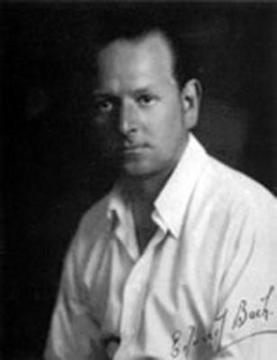
Mount Vernon is the house where the 'inventor' of flower essences, Dr Bach, lived for the last years of his
hard-working life. By the time he arrived in the small Oxfordshire village he
had already formulated the first 12 healers of his 38 flower cannon and the
second 7 helpers in the English and Welsh countryside. In the nearby lanes he
found the last 19 and finalised a formula, known as Rescue Remedy, his famous
and well-loved mixture of star of Bethlehem, clematis, rock rose, impatiens and
cherry plum.
The year was 1934, a hard time in
history but a great unleashing of modern expression and ancient wisdoms that
brought many original thinkers and seers to the fore. There was a longing for a
new world and there were radical moves away from conventional thinking towards
a deeper consciousness. One was made by a young Welsh bacteriologist, who
influenced by these spiritual explorations, left a conventional Harley Street
practice, and began to work on a set of seven homeopathic remedies for chronic
conditions of the bowel.
As he sat beside his patients in the Homeopathic
Hospital in London, he found that it was not the physical disease but the
mind-set and emotional state of the people that determined their treatment. The
same temperaments needed the same remedy irrespective
of the disease. He began to treat these bacterial diseases with great
success (the seven Bach nosodes are still in use today) but disliking the
impure nature of homeopathic essences, he started to work with wild flowers.
The first plant he worked with was a monkeyflower by a stream in Wales. It was
his first remedy: for Fear of Known Things.
For the rest of his life, the
doctor worked with flowers. He walked the length and breadth of Southern
Britain, from Wales to Norfolk investigating the effects of flowers on human
physiognomy and eventually gave up his medical practice entirely. From homeopathy he took the method of
succussion to extract the invisible workings of the plant material and form the
basis of the mother essence. And he also took the practices of proving and profiling.
Proving entails working with the
quality of a given substance or plant, testing it on yourself, noting its
particular effects (most medicine plants or substance contain both cause and
cure, so that if you deliberately take a treatment when you are well, it will
bring on the symptoms that plant or substance will treat). Bach reversed this
process: when he found himself suffering from various emotional and mental
states he would walk into the countryside and find the flowers that could
release him from his torments.
Profiling is
the matching of a type of personality to the corresponding energetic structure
of a plant or substance (e.g. a belladonna type, an arsenic type). Along the
homeopathic principle of like cures like,
the remedy stimulates conditions within your being that releases constricting
patterns. As Bach experienced his own states of bitterness, loneliness, anxiety
and so on, he built up a canon of “types” that corresponded to the character of
the plants.
The first flowers and trees he
worked with he called the Twelve Healers. The number was no accident. Deeply
esoteric, a Mason, with a keen interest in astrology, the Healers corresponded
to the twelve zodiacal signs, Each plant represented not a personality but a
soul-type. In the esoteric tradition, each person is present on earth to
undergo one of the twelve lessons of the soul, based on the ancient principle
of reincarnation. The flower essences helped to remind you of your particular
soul-lesson, your challenges, your strengths and weaknesses. Illnesses occurred
due to a clash or separation between your ego and your soul, and in these cases
the Healers could act as a bridge.
Dr Bach played down the astrological
correspondences of his work, preferring to promote a simple system of remedies.
The second nineteen of his canon addressed the seven categories of emotional
and mental state and make no reference to the soul. His followers in turn, and indeed most modern
practitioners, downplayed the spiritual aspects of his work. Fifty years later it
is hard if you go up to the door of Mount Vernon to see these underlying
influences in the normal-looking brick cottage, amongst the familiar labelled
bottles on the shelves. And yet they are there.
I had not taken any of the remedies
when I sat in the garden. But I knew most of the plants and had explored some
of their correspondences with Bach’s system.
I had stood under the shivering leaves of an aspen and shaken with
unknown fears, dreamed of a honeysuckle that pulled me adroitly back from the
past, felt the cleansing energy of crab apple blossom in a Welsh hedgerow. But
some of the flowers did not correspond as neatly as the remedies suggested..
Some of them in fact struggled within the fixed and narrow band the flower
essences had placed them. One of them
appeared to have no time for it at all.
ii

As I walked through the gate at
Mount Vernon my eyes lit up: a giant turquoise dragonfly, an aesthena, was
resting on a dead rose, and beneath them there was a vervain plant in full
flower. Before my mind had even time to name it, my face had broken into one of
those deep broad smiles that come when you have wanted to see a plant for a
long time and one day chance upon it. For years I had read about these 'inconspicuous' wayside plants with their mighty reputations. And here suddenly
it was. Vervain has been called the king of the herbs but you wouldn’t realise
why at first glance. Nor it is easy to come across in the wild.
Once you find
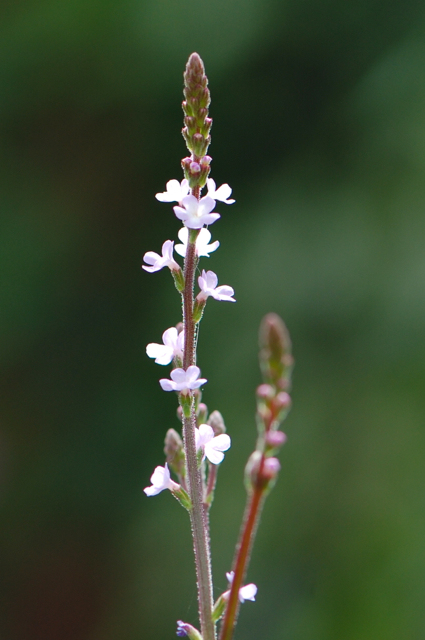
it, however, you know it forever. It has a dry bushy form with typical wavy
verbena leaves, but it is the flowers that immediately arrest your attention –
hundreds of tiny mauve and white flower that shine at the end of a myriad stiff
stems. When you take a second look you see a complex head with a hundred eyes
on stalks, looking at you like an ancient mythical creature, and you cannot but
help stare back, your own eyes whizzing about, delighted, not knowing on which
petalled point to rest your gaze. Oh, a
seer
plant! I thought, as I stood transfixed by its luminescence, as you might be
caught spellbound by the sudden sight of stars in the nightsky.
Vervain is a traditional herbal
medicine for the eyes, as well as a peerless nerve tonic, working on the human
nervous system as an anti-depressant, relaxant, sedative and anti-spasmodic for
tense and jittery stomachs. Its bitter-tasting leaves restore the body after
illness, allay fevers and anxiety, migraine and virus colds. But it is more
famous as a plant of the spiritual realms, as a talisman flower, a
fortune-teller’s plant, a protector and luck-bringer that throughout history
has been sought to ward off plague, avert evil, bad spells, calamity and in
more modern usage, to heal holes in the aura. It was once an altar plant (its
Latin name verbena means altar)
claimed by both Druid and Roman priests and is the chief of the nine sacred
Anglo-Saxon herbs. In some Celtic lands it was known simply as “the herb” and
so highly regarded that you had to wait for one to be bestowed upon your
garden.
In Dr Bach’s system. these high
leadership qualities in the homeopathic system of “like cures like” becomes a
remedy for righteousness, unrealistic idealism, over-enthusiasm (especially in
regard to ambitions for humanity) and burn-out.
“Vervain is for those with fixed
principles and ideas, which they are confident are right, and which they very
rarely change, they have a great wish to convert all round them to their own
views of life. They are strong of will and have much courage when they are
convinced of those things that they wish to teach. In illness they struggle on
long after many have given up their duties”.
Vervain was one of Bach’s core
remedies, one of the original twelve. In his system of astrological
correspondence in which the placement of the moon is an indication of
soul-type, Vervain corresponds with those born with the moon in the fiery fixed
sign of Leo. Which made the doctor of flowers
a 'Vervain'.
iii
Nothing happened in the garden. We
sat in the doctor’s chairs. We sat in on the garden bench, and it felt comely
and sound in the way you sometimes feel in Wales with the wild and mythic just
out of reach beyond the tidy stone walls. The flowers were at their height and
grew in profusion: monkeyflowers edged the pond, great stands of blue chicory
and St johns wort surrounded the bench, roses tumbled over the doors. It was
beautiful and yet something troubled me: what was it?
I found I could not speak about
my experience. Afterwards I realised I had felt walled in and unable to think for myself, trapped in
the garden of a dead man. And then I had felt the flowers, all 38 of them
trapped, like thousands of minute geniis in a bottle, waiting to serve sick and
neurotic human beings who never would meet them, never talk with them or know
their beauty and intelligence,, and I shuddered. After this day, I would not
make a flower essence again.
Mount Vernon had been bequeathed to
Bach’s devoted assistants and now has become a monument to the man and his
work, as well as a training centre. Like many of the original spiritual
thinkers and mystics of this time, Bach depended on his followers to transmit
his discoveries. And, like other great men who depart and put their systems in
the hands of followers, difficulties often ensue in the houses they leave
behind. No one is ever the match of the original. There is a struggle to
emulate the man who now takes on a holy hue: more Krishnamurti than thou, more
Gurdgieffian than thou. Confined in the centres preserved by the faithful, it
is hard to encounter the original energy of their creators. It is difficult to
trace the doctor of flowers, to discover what led him to those conclusions
about vervain. You are faced with a system that is fixed and perfected.: 38
formulas, 12 healers, 7 Helpers. You sit in the garden of Mount Vernon, and
feel repressed by the quiet-voiced, white-coated people in the house.
You don’t want to and yet you
cannot help feeling controlled by the business of healing, by the relegating of
your soul to a type. You try and find out about the man, only to find that he
has erased his own steps. His followers, adherents of the perfect system, offer
few clues. You know however that the man was not perfect, he was impatient
(many considered Bach an Impatiens
soul-type) and that those chairs in his old consulting room were not
constructed out of fancy, but from lack of funds (the doctor famously never
charged for his flower treatments).
In between the glowing reports published
out of Mount Vernon and in his own modest literary output you discover he died
at 50 from exhaustion, weakened by a near-fatal illness suffered whilst working
in a war hospital. Like many inventors and creators, Bach underwent a demanding
alchemical process - the burning of dross, the darkness of melancholy, social
rejection, the interior tussle with the formulation of new ideas, as he faced the complexity of the cosmos, saw the
stars of the vervain sparkle overhead. And yet of this personal struggle, there
is no report.
The problem with spirituality is
that it leaves out the creative, experiential process behind any original work.
The creator is sacrificed for the system, his head laid upon the altar. He
dismantles his own path in favour of the goal. What rules in his place are the
managers of the system, the high priests of temples and pyramids, the secret
masters skulking in Himalayan caves, under the Gobi desert floor.
The doctor wishes the ideal to work, the
soul-types to work, for the pure and simple flowers to be the solution for all
our ills, when we are on a planet teeming with bacteria and complexity.The
doctor wishes the hospitals to be clear calm places where the state of the soul
is considered first before any remedy is sought, but the reality is they are
filled with the maimed and the wounded from the trenches. In the ideal Bach
world you move gently and quietly. You
do not get impatient, get cancer, walk away from two marriages, face being
struck off by the GMA and have to suffer every day.
After an operation on his spleen in 1917, Dr
Bach looked at death every day for nineteen years. But he doesn’t write like this. He erases the underworld, the
poison, the war hospitals, his own pain and poverty. He wants to get as far as possible away from
those intestines and their filthy, chronic states, to render something
intensely complex, pure and simple, without stain. All vice can be cured he declares, by
flooding ourselves with its opposite virtue, as he sluices his ravaged body in
cool water, dresses himself in white robes, sets out to make a flower essence
in the purity of the early day.
Still the vervain waits in the
garden, and still I feel uncomfortable with this altar plant within my sights.
In his elegant, if now old-fashioned, pamphlet Bach begins his discourse with
the statement that all disease has one cause, which is action against Unity and
these actions are divided into types: “the real primary disease in man are
defects: pride, cruelty, hate, ignorance, instability and greed. All these
versions of self-love, every one can be cured by flooding it with our selfless
devotion to serving humanity”. Our vice, he wrote, is our great challenge, “or
there would no no need for our existence here”.
But when the people came to his
surgery, sat in this room, in the depression of the Thirties, when the spectre
of the Great War had ripped through every family and village in the land, did
he see this too as their souls wanting a lesson? Did he not ask himself, as they sat opposite
him in those wooden chairs, that if this ancient, all-knowing system worked,
that after all these aeons, we would have learned our lessons by now, and be
treating each other and the planet in a more enlightened way?
And does not the plant with its
myriad eyes still shine the garden by the gate and ask us to see what lies
beyond the ever-whirling zodiac?
It is the in-between times in
middle England, when we are returning from Wales, trying to find a home. The
following day after visiting Mount Vernon, I go to Oxford, to walk the towpaths
and the nearby territories of our former plant inquiry. Beneath the great lime tree
thrumming with bees I collect lime flowers in a brown paper bag for tea,
collect St John’s wort flowers in the resplendent wasteground for oil. It is a
hot day, and the river sparkles and beckons with its rich scent of water. I sit
on the bank and cool my feet in its green shallows; the river flowers -
skullcap, purple loosestrife, hemp agrimony and gipsywort - shimmer all about
me. A barge goes by slowly. Small boys leap off the bridge and splash into the
pool by Port Meadow. The willows and black poplar leaves rustle in a small
breeze.
In the garden you are in a small
space, in limbo, and someone else is in control. People are looking out of
windows. The plants by the river live in big time, outside history, beyond this
control, out of the garden. They don’t see the walls. They don’t even see you sitting
there, unless you get down to their wavelength. They are getting on with life.
You with your vices, your self-love, your controlling gardening shears, what
are you getting on with?
Here I am considering the 38
flowers of the Bach canon, surrounded by those outside the system, considering
myself as a social description, a soul-type, a personality, a state, and find I
do not fit. Outside the garden, the wild plants live in their own worlds: the horse chestnuts fly through the sky and
rain conkers on the garage roof. The aspen creaks in the salt wild, the crab
apple holds you in her embrace on a summer’s day. I have come to earth, like
everyone else, to serve experience: to sit by the one who is dying, to suffer
my own failure, to lose the sight of the land I have loved and my companions.
To find a new home in a dark time. I have learned to forge meaning from all
these experiences. Meaning can be found, I have realised, in the most difficult
of circumstances, even in prison and war, as poets and seers frequently have
told us. But this is not to excuse the prison, the empire or the wheel.
At some point you have to question
the altar on which you lay your head.
v
Bach’s estotericism, his love for
his brother masons with whom he kept close contact, even in his most isolated
years at Mount Vernon, had bound him to a ancient wheel. His soul-types belong
to a belief system that says all souls have to undergo the challenges of the
twelve constellations. It is a rigid system that insists that earth is a kind
of school of hard knocks for human beings, so that we can be made perfect, like
diminutive well-behaved gods.
The problem with esotericism is
that it is esoteric, that is hidden. Decrees about your destiny have made by
special and high-ranking entities behind closed doors, and yours is not to
question them. When you consider your soul’s challenge, you do not consider the
parlous condition of the civilisation you find yourself in. Least of all do you
look at the brotherhoods of man, secret societies, priesthood’s that are
central to all of them.
All Western esoteric traditions and healing systems
originate within the sanctum of Empire and everything within them, hidden or on
show, is made to serve its cause: the vervain that lies on the bloody Roman
altar, the laurel leaves inhaled by the priestesses of Delphi, the mushrooms
taken by Aztec high priest, the flower essences that consolidate our consumer
lifestyle. When healing asks us, as Bach does, to consider the soul, it puts
all responsibility of the world’s difficulty on our shoulders and diverts our
gaze from Empire. You did something wrong, now you need to fix-it! If you were
good and clean, these diseases would not come to you! In this taking of total
responsibility, in performing this perfect service expected of you, you are
leaving something vital out, something that the vervain is supposedly curing:
your acute sense of injustice, the fire of your indignation, your Self.
“We should strive to be so gentle,
so quiet, so patiently helpful that we move among our fellow man more as a
breath of air or a ray of sunshine, ever ready to help them when they ask: but
never forcing them to our views.” (from Vervain
– The Twelve Healers)
On the great wheel of reincarnation, you
quietly accept your lot, whatever you station. Like the caste system of India,
it is a matter of karma, not history that you are where you are and who you
are. You do not question whether there is any real sense in the human world, or
that it is fair that the man in the mansion is the man in the mansion and that
you serve him. This is not because you are not capable of asking such a
question, but because you cannot see the manifested world clearly, as it is;
you see it divided into vice and virtue, morally shaped, idealistically-bound,
by the spirituality and the gods that you admire.
Unbound, I sit by the shining
river, feet immersed in green water, beside meadowsweet and purple-flowering
mint. By 2002 I have listened to too many quiet and humble people, with their
all-powerful opinions about the cosmos, with their ideas of perfection, of
ultimate reality, with their squeaky-clean ideals, with their temple fantasies
about Egypt and Rome, with their notions of Mother India with her masters and
karmas, followers of the world’s wise healers and all their wise wounds. I have
sat in the Quaker House library and come to my own conclusions about the great
white brotherhood of saints and martyrs. I have argued too many nights and days
with fellow travellers across blue tables, where the only reason we are at odds
with another, are in a realms none of us wish to look too deeply into.
We
should have looked at all the ramifications, and deconstructed the wheel. But
we didn’t. We were too busily persuading each other to flood ourselves with
virtues, to shakes our souls free from entangling relationships, playing
doctor, medicine man, priestess and missionary. To see the wheel you need to
look at everything, all at once, objectively, with your vervain eyes. And
though it appears noble to alleviate suffering, to offer advice, no one in this
business of helping and healing is able to look at what created that suffering
in the first place, with the facts of history in front of our eyes. Without
considering our own experience within that history, we are blind.
And the plant, the vervain that
stands by the gate in the brilliant July sunshine, what does it have to say?
The vervain flashes its lights. Switch it
all on! The plant is no way the servant of any civilisation or its gods, of Jupiter or Thor,
Jehovah or Ra. It is entirely a being in its own right, in whom we seek
guidance on how to proceed along the way. The vervain includes everything, all
stars in the sky, not just one. Spirituality works within a narrow band, a
duality of right and wrong, within the simplification of an artificial linear
system, rather than within the complexity of living systems. Its creed: if only
you people behaved properly the world would be all right! Its spokesmen, the
priests and the doctors, speak on behalf of the wheel of humanity, not for the
earth or the human heart. To question its supremacy, you have to go to the
river, feel its flow around your feet, revisit the garden in your mind’s eye,
with the flower that stands beside you.
vi
Originally the plant did not come
alone. It came with two companions, which the flower guides will tell you are
watermint, the wild mint of the English river, and meadowsweet, the rose of the
wetlands. The guide books do not say why these humble plants once held special
divinitory powers for the Celts, any more than they say why vervain is
chieftain over the nine herbs, the Anglo-Saxon lucnunga, which include the other great roadside plants, plantain
and fennel. You have to see for yourself why this is so.
I did not come across vervain
during our original flower inquiry in Oxford, but I did find it in French Joe
Canyon one awkward afternoon with Mimi and Francisco. There was a stand of the
American blue-eyed vervain under a white oak. I sat beside the flowers among
the scratchy grasses a while, and afterwards went swimming in a waterhole. I
realised that this trio of ancient 'visioning' plants were about seeing in
time. The meadowsweet was about seeing into the past, the watermint, the
future. Vervain was about the present, about seeing in all-at-once time, many
eyes in one place time. Seeing what is staring you in the face.
Born in a fallen house in a fallen
time, I could never make any claim for purity, nor did I ever seek to become an
immaculate abstainer, born-again, an example to all unfortunates. How could I?
The solar path is an alchemical path, a medicine path, a poison path. The old
habits you kick become your katchina; your once before loves, your materia. The blue pill, the tin of
tobacco, the glass of vodka, the elicit affair. These substances are neither
your shame nor your enemy, resisting them has given you the inner strength to
walk from Empire. Like all creators, your struggle has kept the flame of spirit
burning inside your heart. With this flame you can hold the poison of the rose:
spring cherry, wild plum, crab apple,
meadowsweet,
The poison of the rose is
particular. The source of prussic acid and cyanide, it is a taste you sometimes
catch biting into the kernel of an apricot or peach. The poison’s
characteristic odour of bitter almonds is most striking in meadowsweet, once
highly esteemed as a strewing herb in Elizabethan parlours and dining halls.
When you bring the fragrance of this rose to the doctor’s house, something
unexpected happens.
In Oxford the queen of the meadow
stands tall in the waterlands: fluffy-headed, scented, mysterious. The wild
mint by the bank stands like young god, laughing, with horns on his head. The
Thames sparkles alongside them. United with its companions, the vervain flashes
its lights, no longer dusty and dry by the roadside. In the Arizona canyon I had swum alongside the little garter snake in sharp-cold rainwater and afterwards lay
naked on the rocks to dry. Something troubled my heart as my companions gathered
their healing plants beneath the shadow of the red rocks. Something vital
between us was missing.
You enter the garden, coming from
the outside, bringing your experience of those difficult moments with plants
and flowers with you, bringing fluidity in your wake. The meadowsweet and the
mint live beyond the garden, in the wild lands, in the watery meadows,
everywhere that is moist and free-flowing. Bringing succour to the dust-headed
king, chief of the nine herbs of the wayside.
Meadowsweet brings back the poison
of the past. Dr Bach, scrubbed clean, white robed, pure-minded, sees the building of god
beautifully constructed. It matters not if you are born high or low, he says,
everything will make sense in the end. There are challenges to face, but no
shadow. Disease will one day be conquered. The hospitals will be quiet
meditation places. The light around us is ever-lasting. The earth is god’s
garden. All manner of thing shall be well.
As we look through his eyes, we are look towards this uplifting future,
but the past is weighing hard upon us.
The meadowsweet lives outside god’s
empire, tall in the damp woods, in the marshlands, carries the pain-killing
properties of aspirin in her tough stems and leaves, her ability to
decrystallise, to release all trapped energies in her fragrant and flowing
presence. The rose enters the room, with her faint odour of cyanide. The
doctor stands amongst the flowers redeemed from the margins, god’s chosen
healers, without history or mythical association, without any poison in their
veins: American monkeyflower, Himalayan balsam, African blue cerato, Dutch
honeysuckle.
The meadowsweet brings wildness and
complexity into the garden and floods the order of Empire; brings her poison to
the doctor’s door, poison that would cure a broken spleen and heart.
vii

Like all seer plans, vervain is a
tranquilliser. A tea from its leaves brings you into a relaxed state so you can
access your heart and imagination, your own flowermind. It brings a stillness
that allows you to find the inner pathway to the sun, in the darkness, in the
deep night time of your soul. Sometimes what you behold are not images, but
feelings. In Dr Bach’s garden, I had felt claustrophobic. This feeling of being
spiritually trapped was not personal,
it was alerting me to souls that were held trapped on the wheel, like so many
genii in tiny brown bottles. Somehow I needed to find my way out of the garden.
The bush by the gate lights up your
mind, so you see everything-at-once, in all its complexity. The flower essence
guide will tell you that this remedy for 'overdoing it' can be seen in the
plant’s structure, the way it branches
out rigidly in many directions. All that effort just for those small flowers!
The stiffness of the plant is your stiffness. Like cures like. But this is to not acknowledge vervain as a plant
of seers. Standing at a certain distance, your body experiences the plant in
its entirety, as it appears like a globe. You get the vervain total effect: it
electrifies your circuits, lights up mind, body and heart in a split second.
That’s when you realise why it is the king of the herbs, commanded by the regal
lion of the firmament.
With all your strict vervain eyes,
with your switched-on heart, you are not fastidious, You look straight on, at
all the ramifications. The spiritual
system wants everything neat and tidy, boxed up and numbered, a solution for every problem, with all the
bad things and inconvenience out of the way,but the earth is not neat and
tidy. It is vast and complex, a free-form interweaving of myriad lifeforms, in
which each human strand with its many subtle hues, with its stories and
experiences, runs through like a silvery thread flashing through silk. As you
see a tiny corner of this fabric is revealed to you, a microscopic strand of
many dimensions that reveals the giant complexity of the whole. Our unique and
subtle appearance in this web cannot be relegated to a formula. If this were
so, the earth would be a machine. And it not, it’s a transforming matrix of
dimensions, most of which we cannot see in daily life, and some we will never see.
And the very nature of this creative and transformative process means life can
neither be pure, nor simple. Anymore
than bacteria, whose archaic forms constitute the very soil which feed the
plants so life can happen, can be cleansed forever from our hands.
To see with your vervain eyes, is an art, a voyage
into the unknown, a task. The work it exacts is to acknowledge with unwavering
clarity what appears in front of your eyes and translate it into daily terms.
It is to see what is. What is requires you look unequivocally
at what lies before you, without dismissing what you are seeing, fighting,
superseding it but keeping it steady within your sights. From here you ask
questions and receive readouts. You question what you see. Switch it all on! Nothing hidden, no god, no ulterior purpose, no
esoteric principles, no masters, skulking in caves for aeons. Only you and what
you see. You hold a fixed position because, belonging to Leo, the sun is not
going anywhere. You can’t leave yourself out because without you, without the
sun, core of the self of all human beings, nothing is seen. You are the eyes of
the cosmos, the light that switches itself on in the dark. What you see in the
dark doesn’t happen without you. To see with the heart means you cannot let the
mind interfere with its eternal say-so, with its great tuppence worth of
opinions and criticisms, but most of all with its predilection for ideals.
Ideals blind the seer. To hold an
ideal means you desire to see things as they should be, rather what than are,
within the movement of transformation. With the vision of perfection before
you, you start wishing that everything on earth were otherwise that it actually
is. Spirituality promotes the ideal perfect state without pain, from which you
have fallen because of your imperfection. Believing suffering is wrong, you
start constructing realities where pain does not exist. Realms where masters
walk in robes, temples where everything is pristine and orderly.
Suddenly you
are not on the earth, in time. You are inhabiting a perfect, clean world in the
future. You wish you were as you imagine you can be in your mind-sphere. You
start erasing and excluding those things that are not perfect, with simple
clear cut choices of all spirituality (good and evil, right and wrong, love and
fear). The system you have invented you realise is perfect, but you are not.
Pretty soon you end up not being that important. Soon you are irrelevant,
squeezed out. You are a number, a soul-type who fits or does not fit the
system. Spiritually, politically, it’s a dangerous road. War is the worst of
its manifestations, Dr Bach’s 38 flower canon is a less dangerous system than
most, still I feel squeezed in the garden, on an earth whose only raison d’etre is that fallen human
beings evolve and learn their lessons.
The stems of the vervain are rigid
because they hold the light, the structure of light intrinsic within all living
forms. When you bring the structures that hold of the world to light, you see
whether they tally with the living systems or not. This ability to look at any
individual and collective action in this multi-light (of the vervain) enables
you to ask the question: for what purpose this war, for what purpose this
inequality? Does my action bring liberation? Does it serve life? Does it bring
the light of the sun to bear within all things?
When you ask the question, you
realise that all artificial systems of the world- political, religious,
scientific, medical – serve only mystify and divert the human ability to see what is. None of them encourage our
innate ability to directly perceive the fabric of life. To see into the river of life, into the fluid
and dynamic non-linear dimensions is a radical act, the dangerous act of
creators, since the Empire is founded on rigid and linear system of duality.
They require allegiance to the perfection of the artificial mind. But the
hearts of seers and creators are not loyal to empire, they are true to the sun,
since it is the sun that brings the light to see in the dark.
After the Great War, when new world
orders were being drawn up and new world servers recruited, two of the
century’s greatest seers, Rudolf Steiner and Krishnamurti walked away from the
theosophical spirituality that influenced Edward Bach, and forged their own
ways of seeing the hidden dimensions of the world. Both conducted their own
individual investigations into the perception of reality, and spoke and wrote
about their findings. Some of their most
illuminating insights come from their direct encounters with nature:
Krishnamurti walking in the early morning light amongst the live oaks of
California, encountering an owl under his bed in India; Steiner in Austria and
England, investigating the alchemical effects of wood ants and bees, wild
camomile and horsetail within the living soils of the planet.
The sprit shines like the sun,
permanent, endurable, but the soul walks a different path. Like the moon, waxes
and wanes, brings tears, redemption, inspiration, keeps close to us in our
lives, hold our accounts, makes the changes in our spirits possible. Bach’s
vervain soul has a fiery core, ruled by Leo, the lion-king. In his small book,
this fire flashes when he speaks of animal vivisection, the cruel relatives who
trap their children, the friends who bind you to their will. To be free is the path of all souls he says.
Krishnamurti looks at the world of matter with his eagles eyes, his rishi’s
eyes. All is laid bare beneath the Brahmin’s gaze. Steiner, like some forest
salamander, glowers strangely amongst the ashes of his crucible, looks deep at
the workings beneath your skin. Though their work is engrossing, illuminating,
somehow there is something not quite human
about the way they look at you.
Doctor Bach leans quietly forward, his round
Welsh face like a full moon, as he shines a light into your heart. There is no
penetrating analysis of the people who came to see him, nor in the flower’s
alchemical workings. You are not shown the interiors workings of beehives, or
behold the cosmos or the face of the tigers. You find his words, pious, almost
frustrating. And yet, it is the inconspicuous doctor, whom you accompany, as he walks through the gate and
goes down the Oxfordshire lane, to drink a beer and to sing a song with the
people of Brightwell-cum-Sotwell on a summer’s day.
viii
Dr Bach sought out the wild flowers and in a
time of crisis, which was his own
and
that of history, they came to his assistance. His followers in white coats, may
not follow him out into the Oxfordshire hills or along the seashore of the Norfolk
coast or speak with the humble vervain of the wayside. But inspired by him,
some of us go and sit in the canyons.
When we sat beside these flowers,
these bushes and trees, we realised to release yourself from the wheel you have
to look at consciousness itself. You need to go beyond spirituality and
esotericism, and look at the role of the seer with your own heart and inner
eye. You have to imagine the relationship between the sun and its technicians
that forms the basis of all consciousness. And find a way out of the garden.
The Empire prowls the world seeking
ancient wisdom. It seeks secret knowledge, like physical treasure, as a power,
a tool of supremacy. It goes to the temples and pillages the tombs of kings and
sages, scours the constellations, looking for signs and star-gates, mighty
position and talisman. Where is the
secret of immortality? It must be here! No one finds it. Great Thoth has
hidden it somewhere, the seekers declare. The shrewd and wily philosopher,
Derrida, stepping outside the pyramid, overhears a dialogue behind closed doors
at the beginning of Empire.
It went like this: when the artifex
of medicine, Thoth asks the king for his bless his new invention of writing,
The Pharoah Sun-King shakes his head: writing is a substitute for the real
thing. You say the text is a tool for remembering but because of your tool the
people will lose their memory. You say it will contain wisdom, but the people
themselves will not be wise. The text will become more powerful and all-knowing
than themselves. The king said it was a poison, a phamakos. And from that time on all writers and inventors have
suffered Thoth’s fate, the fate of the pharmakon:
they invent a cure that is also a poison.


.jpg)





 Dark Mountain: Issue 20 - ABYSS is available