Showing posts with label food growing /plants. Show all posts

Friday, 7 August 2015

Taking a break... postcard from the edge

Dear Everyone, I have been taking a break from blogging for a while. Not that I am on holiday though! Just centred on other activities - slowly crafting Dark Mountain's Issue 8 on tech and tools and prepping the ground for a new grassroots publication (watch this space). And of course wavy sea swimming and plant attention (here after some hefty weeding with Mark at the Bungay Library Community Garden )

I do have a post brewing about some new adventures with Dark Mountain (here in red trousers about to give a talk with Nick Hunt at the Scottish Sculpture Workshop) and some past adventures in land dreaming that I am reworking and updating into a future mix. 

And talking of heady mixes here are some of the latest summer meads we have been making: the end of strawberry, elderflowers and roses (June), the maturation of raspberry, mugwort and other high summer leaves (July); the beginning of redcurrant, spearmint and marjoram flowers, and blackcurrant and fennel flowers with heather honey (August). This last one we drank around the fire at Lughnasa. It was divine! Now bubbling away is wild cherry with meadowsweet, vervain and watermint (that's medicinal!). Mead really shifts your attention and highlights the presence of flowers and insects whereever you go. Kind of puts you off that writing tech too....

Photos by Mark Watson and SSW

Wednesday, 8 May 2013

ROOTS, SHOOTS AND SEEDS: The Spear Carriers

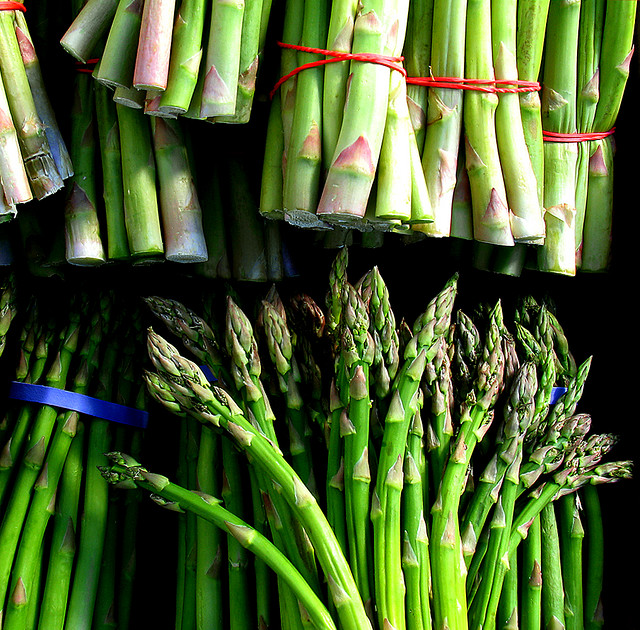
Roots, Shoots and Seeds is a book about the local community food movement, set around the wide arable fields of East Anglia, following the tracks of the crops that grow in these clay and sandy soils, from barley to flax, from rapeseed to potatoes. I began to write this book with my friend and fellow Transitioner, Josiah Meldrum in 2009, and although we were unable to complete and publish the work, our attention set the scene for other food projects, such as the Low Carbon Cookbook and Happy Mondays at the Community Kitchen. Now May has arrived in full force, so has one of Suffolk's most cherished vegetables. In celebration here is a section in praise of the great green spears . . .
 
"There she is," said my father, "Boudicca! Look at her! Formidable!" Craning our necks we looked upwards toward the statue in the darkening sky. A woman on a chariot flew into the night sky above the arch. Boudicca was sacking London, trampling invaders under her spiky wheels. We were travelling back along the red road that runs between the Palace and the Park.

For years the statue at Hyde Park Corner signalled the return to the city, after days and sometimes weeks spent in the countryside. We had, alas, come back, but Boudicca was holding the fort and pointing us in the right direction. Just in case we forgot our way.

In spite of his admiration for barbarians my father was not one of Boudicca’s men. He worked for another woman entirely, a Roman matron who stood blindfold on top of the dome of the Old Bailey. She was a hard taskmistress: the folds of her gown unyielding, her sword exacting, and for all the advocacy he performed in her service there was none of the jubilation he expressed for the warrior Queen of East Anglia. But then my father’s heart was not in the work he did for Justice, it belonged to the country we had just left behind. To a large ragged garden that lay by a marsh, a plot of earth with a wheelbarrow and a spade beside it, apple trees all around and a bare mound that signalled the presence of the greatest of British vegetables, white crowns that lay hidden in the earth: asparagus.

Asparagus is a lily and like all lilies, otherworldly, and keeps its strength in reserves underground. From these rich stores, it bolts through the earth in straight green shoots with purplish heads known as spears in Spring, when it is harvested until midsummer before it branches into its stiff and feathery form and flowers. Like all lilies it is ruled by the moon, the planet of memory, and, in spite of its overtly masculine form, unequivocally the queen of the field. The crowns take years to mature and the spears are time-consuming to pick both in the wild and domesticated state and consequently, though eaten with barbarian fingers, they are always treated with a certain reverence.

When the asparagus arrived my father would appear triumphant in the door and stride towards the kitchen, carrying the spears. The Moment had arrived. At supper we would watch for the signal that meant everyone was allowed to begin eating. He took up position at the end of the table. The napkin flicked. The glass was filled. The asparagus lay steaming on our plates. A spear was lifted dripping with creamy butter, held aloft for dramatic effect, and then, in it went.

Dear God, dear God! exclaimed our father, rolling his eyes upward. Dear god, dear god! we chorused, laughing between our own slippery green mouthfuls.

We did not question why our father always called upon the Almighty when he ate something he loved since he was a devout atheist, however it was how all great foods were addressed. Ordinary foods were quietly and effortlessly dispensed at the other end of the table by my mother, all manner of stews and pies and puddings, but the roast meats of Sunday, game fish, smoked fish, French cheese and most assuredly his own garden vegetables belonged to my father’s end. The ritual and mythology of food belonged to him, all foods that required ceremony, a careful handling of carving knife and fork, a judicious serving, came under his dispensation.

I spent a life-time excusing myself from this dining table, liberating myself from the constraints of its form and hierarchy, forgoing manners, dramatic gesture, napkins and claret, and yet when it comes to asparagus, I still exult.

To gain a true relationship with food, we have to regain a relationship with place, remember the part of ourselves that knows about seeds and earth and rain. Sometimes this memory is secreted in a place we don’t want to go, in the deep earth, down an ancestral path that leads back through time towards a battalion of asparagus marching over the East Anglia fields in the month of May. Our buried treasure.

Ru Litherland, Hackney-born, might have run along Boudicca’s chariot. He is a radical man who grows all manner of vegetables in renovated land in Walthamstow. He says that many who come to enlist in his volunteer army of seed sowers and leaf pickers, fall in with its movements and requirements easily because their old man once had an allotment and grew his own veg. When they come to the land they just know what to do. They have listened to a rhythm and it has somehow got into their bones. I have listened to that rhythm: the chink of spade as it scraped the eastern flint, the shake of grass, the rattle of bean poles in the wind. I once climbed an apple tree and watched the East wind as it ran through the blond marsh grasses of Kent, my eyes scanning the horizon for the distant sea. And below me I listened to the sounds of the garden: tack tack tack.

You could get nostalgic remembering those sounds, but I have learned not to trust nostalgia especially when it comes to fathers and gardens and going back in time. I want to go forwards, taking this sound in my ears, this feeling in my bones, this pungent taste in my mouth, a taste of blood and iron.

* * * *

I stand at the chopping board in the kitchen in the spring evening. Outside the window the apple tree is heavy with blossom. My hands hold a knife, my attention focussed on cutting the woody ends from the asparagus. My left index finger feels for the place to cut and then the right hand slices the spears sharply: tack tack tack. The hands know things the mind does not. You pick up an axe and know without knowing how to chop wood, bake bread, wrap the dead, hoist a sail. When I was 29 a gardener put an egg in my hand. It was warm and smooth. Listen! he said. Tap tap tap: a chick was pecking its way out of its shell into the unimagined vastness of the world. I had been wrapped up in myself, far away from earth and suddenly I was looking into his eyes. “I wanted to get through to you,” he said.

Something stifled in us needs to come alive, break out, remember. We need an encounter with life to do this. My old friend Carol went into the desert when she was 40 years old. Everyone had left her and she had to start again. She sat down in the middle of nowhere and cried for a long time. Then she put her hands into the earth and her hands formed bricks out of the red mud. She built a house with those adobe bricks and then she lived there. Some people put their hands back into the earth and they find themselves weeping or laughing, flooded with feelings they have no names for. Then their hands start searching out roots, pushing seeds, pulling weeds, throwing out flints. Something happens in this moment when your hands take charge of your life: something quiet, unsusceptible to the eye, that thunders inside you and breaks. You think it is your heart. But it’s not. It’s your isolation.

The root to the real world is cut quickly. The forgetting of how to be in nature happens quickly.The diseases that come with the Western diet come quickly. They come to indigenous people and to girls who live too long in cities. Everyone blows up like a balloon, gets diabetes, their hearts fail and their stomach knots. The world of factory food goes too fast for the natural systems of human beings. To survive on this food you have to eat too much and not think about what you are eating. You have to forgo your common sense and the knowledge of your ancestors and fit the requirements of industry in the same unnatural ways that food is processed and homogenised. Somewhere deep inside you shut down. You find yourself gazing up at the actors, the kings and queens at their high tables, and forgetting you are among spear carriers without whom the play is not the play.

I stand at the chopping board, green spears in my hand. Outside the blackbird begin his evening carol. I do not make Victoria sponge or marmalade like my mother. I don’t give dinner parties and sit bejewelled amongst guests, or lay down claret, or cross the Channel to eat raie au beurre noire and Camembert. I don’t dine like a king, like my father, on smoked eel and partridge, I eat like a spear carrier. I know things about food and history my parents’ generation never knew. I know that Boudicca is not Boudicca, but a boy in a war chariot overwhelmed by the angel crowned with olive leaves. A statue to peace erected in 1912 just before the bloodiest battle ever fought began. I know that what we need is not peace but life in our hands, a year filled with great moments. Dear god, dear god! holy food for unbelievers, who don’t worship or go down on their knees but declare their happiness out loud for the fruit of the season: for greengage and rhubarb, for samphire and blackberry, for purple sprouting broccoli and leek.

Image3898
I don’t take out a cookery book to cook this bundle of asparagus, picked this day in Jack’s fields in Middleton. I will not cover them in hollandaise or adorn them with shavings of truffle or Parmesan. I will not hide my spears inside risottos or a quirky nest of noodles, nor in any manner of grandiloquent dish I once learned to make in my working city kitchen, surrounded by pans and knives and cookery books, my apron hanging on a hook behind the door. Tonight the spears shall take their place on the plate as they emerged from the earth. Naked and green, beside a cut lemon, a small pool of olive oil, sea salt, black pepper. I will serve them in the glasshouse on the blue table. It’s the Moment of the first summer vegetables: new potatoes, broad beans, spinach. A humble dish of vegetables on a great day in May.

Can you sing praises to broad beans and spinach? To a blue kitchen table?

The Israeli poet Aharon Shabtai sings praises to cucumber and scallions:

Times are bad. I take an oath of loyalty to the table

coated with white Formica.

His fellow countryman, the Palestinian poet, Mourid Bougati, instructs us in these times to speak of real things, to hold everything dear. In a world dominated by abstract theorems, by the high-flown rhetoric of empire, by eternal war, to cherish the concrete and the real with words is the radical act of writers and chroniclers. To acknowledge time and place, to engage in the physicial breathing and growing world is radical. Cooking is radical. Tasting the fruit of the earth, knowing where it comes from and whose hands grew it, the name of the grocer and the flower. Holding the spear and walking away from the play, in the opposite direction to Rome.

* * * *

Eventually the stern taskmistress demanded my father work harder and harder, the piles of paper in the study grew higher and higher, and the vegetables in the garden slipped away; my mother got tired and started to buy readymade food. The pies and the stews slipped away. And then they both slipped away. I was alone in a world without the ritual of carving knife and fork. The garden was paved over, earmarked for development. The kitchen fell silent. The wooden spoons lay unused in the drawer. Reluctantly I came down from my apple tree hideout, where I had been observing the wild world for twenty years, keeping a log.

Now what do we do? I said.

Frankenstein has loosed his monster on the world, an industrial chain of hubs and tankers, factories and refineries that devours every living thing in its path, spews out poisons and bad air. He stands in the laboratory mixing cocktails of enzymes and chemicals, cheating time, killing the soil, outside his juggernauts ceaselessly thunder up and down the roads of everywhere, perpetually, silently, the shelves and freezers are filled with food so cheap, so convenient, that the people forget that it is the stuff of life and comes from the earth, emerges in Spring, like the asparagus with the bluebells and the nightingale.

How can anything we do make a difference? How can knowing these facts about food serve us, knowing that Frankenstein has every base covered, is busily stripping the living systems bare, stalking the countryside, spraying the barley field beyond the hedge even now so I have to close the kitchen window not to inhale its noxious drift?

Because when the tractor with its long arms has left the field there is the blackbird singing as dusk falls, because you are still standing by the chopping board and the asparagus is still in your hands. Because you remember the feel of the land in May. The greening of everything. Something went in deep those years ago in the garden and though you are living in a different time you haven’t forgotten the lily crowns that lie for years underneath the soil. Frankenstein tries to make the world forget the deep and slow things, the plants that move according to sun and moon and alchemise life in their root and stem and leaf. He runs on clock time, 24/7 time, on high-drive, in the fast lane, where one day is the same as another and everyone is interchangeable, replaceable, only worthwhile for their ability to feed his monster’s maw.

Under his tutelage whole legions of us fall asleep, lose our minds, forget our names, who we are, what we are doing. But some of us are remembering, singing hymns in praise of radishes and olive trees, not moving from where we live, on deliberate go-slow. Growing lettuces in windowboxes and barrels, on rooftops, reclaiming land, regenerating soil, in the hinterlands and back country, in the cracks of the streets of cities, behind railway stations. Meeting up in halls and backrooms, baking our own bread, stirring the pot. Speaking to each other across tables.

Some of us are returning, carrying our spears. Coming home.

Images: Organic Lea community veg bed; asparagus from local farmer's market (Creative Commons); Jack's Suffolk asparagus with Maple Farm radishes, 2013 (CDC)

Saturday, 17 November 2012

Mr Moyse and the Green Tomatoes

Years ago when I first came to the lane, I joined a neighbourhood action group to protest the development of a tourist railway. It was going to cut through the network of lanes that run along the marsh in the back country of the parish. I offered what I could do as a newcomer. I wrote flyers and press releases and stood up in the village hall, speaking on behalf of the badgers and the blackthorn and the people who love to come down these "commons" on foot, or bicycle, or pony trap. After that (very successful) campaign, I felt I had finally put down roots. Everyone waved cheerily as I walked by their houses. And none more so than David Moyse (75) ex-engineer, steeple- and record keeper, who has lived on the corner of the lane all his life and his family for generations before him.

When I joined Transition the following year, I began to write again, after many years silence, and one of the very first stories I wrote was about the little roadside stall I found with neat bunches of leeks for sale and the man who grew them in his wedge-shaped garden.

It was the beginning of the Low Carbon Cookbook. 

 "Near me at the corner of the lane, Mr Moyse puts out his excellent tomatoes at the end of the season on a roadside stall in the manner of Suffolk cottagers, with a tin or jar for coins.They come in three sizes, but all of them are intense. Last year as we walked by we would say how much we were enjoying the tomatoes over the hedge. Just as October was coming to an end I found Mr Moyse walking towards me in a most determined manner:

"I’ve got to have a word with you," he said.

I had been talking about green tomatoes, how they are so delicious fried and make such good chutney. And now I found myself with several kilos of green fruit and a challenge on my hands. We had got talking when I went round to collect them and I had found out that Mr Moyse’s grandmother once lived in my house. She was the best cook in the lane he said.

So this is a small sustainable tale about honouring the elders and finding your roots wherever you are. Start talking over the hedge and you will make contact with another generation who knew how to live in synch with the land. Talking to the greengrocer in the market town I found he used to deliver milk by horse and cart as a boy (still works two horses), that the man who owns the local organic store originally comes from a dairy farm in Galicia where they still milk their 70 cows by hand. After the evening milking he says the family sit round together in the barn and talk until midnight. The key to human sustainability is communication; and not being afraid to open your mouth and make a fool of yourself. That way you find out that making chutney is dead easy (just don’t burn the pan).

Because I had of course never made chutney in my life. I liked the idea of making chutney which is not the same thing at all. I searched for a recipe from the library, picked a few windfalls from the apple tree and brought out the biggest pan I had. (Well actually it’s the only decent pan I have). Several hours of chopping, stirring and bubbling later the house was redolent with vinegar and mace and raisins and I had ten shiny dark-gold jars in the larder.The largest one I reserved. Six weeks maturing time later, I burst into the Moyses' bungalow and wished them a Happy New Year! I wasn’t ever quite sure whether they liked it, or were just being polite when they accepted the jar quietly with a smile.


This year on All Souls Day Mr Moise called out down the road after me. 
 
"Would you like some more of those tomatoes?" he said.
"You liked it the chutney then?" I asked.
"It were beautiful," he laughed. "Come round tomorrow."
 

So now we have a deal. Last year I found out about the history of the lane (his grandfather was head horseman of the neighbouring farm, his father the blacksmith), this year I learned about making wine from the fruits of the hedgerows and the local gardens, from rosehips, grapes, whitecurrants, blackberries, and now I’m having a rethink about all those windfalls I see lying around. Couldn’t we get an apple press and starting making our own juice?

It’s is not an official Transition initiative this lane I live in, but it is a transition lane in spirit, with all the right ingredients for resilience: market garden and barley fields, horses and rabbits, allotments and ancient coppice, wild cherry hedges and oak trees. There’s a good diversity of people too – dwellers of grand houses and humble cottages, newcomers and natives who have been here for generations. The lane brings everything and everyone together. Sometimes we meet and get talking about what the sloes and the mushrooms are doing this season. The plants are always a bridge. That’s when you get to feel you are living in the same place, in the same land, on the same planet. It’s the most extraordinary thing about transition. It makes you feel you belong in a time when you never thought it was possible."


So now, years later, Mr Moyse is definitely David. Now I know he doesn't like being called Mr., and is happy for Mark and I to swing by, talk over the gate, and ask for things if we need them. He has lent us his old lawnmower (which we eventually bought), and we have been enjoying his cucumbers and beans and delicious ripe tomatoes for several summers long.

 Now I always make my own jam and chutneys from local fruit - yellow cherry plums, damsons, apples, blackberries, and of course green tomatoes. This year I've used large unripe marmandes donated by Mr Pinder aka Malcolm, and several tiny Columbiana cherries we grew arounnd the tent in company with their fellow Solanacea cousins, Hopi Tobacco. I've had to move quickly because Mark is Very Partial to fried green tomatoes for breakfast. Those gorgeous slow-growing marmandes are a big treat too to have amongst a good pan of roast vegetables (right now sweet potatoes, last of the peppers, parsnip and pumpkin). I used a recipe from Elizabeth David's Spices, Salt and Aromatics in the English Kitchen, a very old Penguin I found in a junk store. I added a chilli and used mace and cloves (as there was no allspice in the cupboard), apple cider vinegar and less sugar and salt.

Green Tomato Chutney
2lb green tomatoes, skinned and chopped
2lb cooking apples, peeled and sliced
1/2 lb onions, sliced
1 1/2 lb brown sugar
1lb raisins or sultanas
2 tsp each of ground ginger, all spice and black pepper
2 cloves garliic
2 tbsp salt
1 1/2 pints of white wine or Orleans or white wine vinegar

Put all the ingredients in a pan, except the vinegar. Moisten them with some of it and cook gently for appromiximately an hour. Keep adding the vinegar as it bubbles down. When it reaches a jam like consistency it's ready. Allow to cool for a while then then pour into warmed jars. Keep for six weeks at least before using.

ED says it is "a long-keeping chutney"  . . .  just not in our house! 

Images: green tomato chutney (CDC) photographs from David Moyse's book The Village Where I Went to School, published by Southwold Press and available from Wells of Southwold or Boyden Stores, Reydon, £7; tent garden wtih Lesley from Sustainable Bungay, 2012 (Mark Watson).

Wednesday, 29 August 2012

52 FLOWERS: 7 wild plum

great milton, oxfordshire 98
T
his is a story about time and wild roses. About certain moments in which life changes its form and its direction. Time is what makes sense of everything in the end on the earth, and only the heart, lover of mysteries, can tell us why. When you are young you know that time is precious and when you blossom, like the rose in the hedge, you think that moment of the heart is forever.

You think the moment of the bee arriving is everything. Then as summer comes and you become busy with leaves and stems, you forget about blossom. And then one day you discover the fruit. At a time when you thought everything was over. There in the middle of your life you find its green rewards, ripening in the autumn of your time. And you realise, as the birds begin to gather, as the people begin to look up into your branches, that the fruit was what everything was really about.

When we return to England, we stay in a cottage belonging to a writer who is away researching a thesis in Mexico. On a shelf in her kitchen, there is a book about vegetables by a writer called Colin Spencer. Sitting in the sunny kitchen, under the thatch one afternoon, I begin reading the introduction to this book and halt abruptly half-way through: I have found a sentence about slaughterhouses. I have not, until this moment, considered slaughterhouses, though I have all my life been an eater of meat. The sound of a thousand cows are bellowing through the kitchen.

You might say: Oh! Just a vegetarian statement about factory farming, and turn the page, ignoring the sound. Except that I cannot turn the page. Because I once knew Colin Spencer. I stayed in his house. I had a dramatic experience once in this house that is now coming back to me, bellowing through the years, a bellow louder than all these cows who face their executioner in the abbatoirs of England, and the sound is shaking me, deep within the core of my being.

When I was young, in my blossom time, cooking was one of my greatest joys. I met Colin Spencer whilst was working as a food and style editor for a magazine. Many of my friends and colleagues in those days were food writers. They were critics and cooks, restaurateurs and barmen. We all lived in a world governed by batteries de cuisine, and set our clocks by the migration of game and the vintages of fruit and wine. We were hunters and gatherers of a modern sort. Travelling abroad, taking trains into the countryside, we went gleefully in search of local produce, fresh ideas, new dishes, raiding markets, farm stores, smoke houses, roadside stalls. We always returned laden: we wrote of our voyages in the newspapers, produced photographs, cooked up storms in each other’s kitchens.

Off duty, we sallied forth to research the bars in obscure barrios of European cities, in the glittering restaurants of Manhattan and Hong Kong, high or low, we did not care: we were in pursuit of the obscure, the delicious, the authentic. We hunted down grocers, delicatessens, bakeries, taco stalls, noodle parlours, tavernas, inns, brasseries, imperial hotels, harbour hotels; we spoke with fishermen, mushroom collectors, herb gatherers, all manner of cooks and shopkeepers; we sampled, selected, tested out. We were generous in our international exchange, gave each other cookpots and curios - ceramic knives from Japan, bitter vegetables from Italy, tagines from Morocco - kept extravagant bunches of fresh herbs on our windows sills, our larders replete with salamis, artisan jams, boxes of country wine. We could quote Elizabeth David, and knew every which way with tomatoes and olive oil. In short we were obsessed.

But Colin Spencer was different from us. He was older, in his fifties, and did not roam the world like a conquistador. He lived modestly in a forest in Suffolk, grew his own vegetables, kept a wicked-temperered goat in his orchard. But what distinguished him most was the fact he was vegetarian and held very strong principles about the production of food. He ate game – duck, rabbit and pheasant - when they were caught by the local hunters, because he said they were wild, part of the fabric of the place. Food for him was not the quarry of holiday markets or Soho restaurants; it was sustenance that came out of the land he was living on.

What did we know of this relationship between land and man and beast? What did we know of ethics, of responsibility? The time of fruit? We were questing in our callow blossom time: romantic, sophisticated and perhaps a little greedy.

Sometimes we went to visit Colin Spencer in his house in the woods. It was a solitary house at the end of a forest track, surrounded by a large garden. You entered through a conservatory full of sharp-scented geraniums. A generous table always awaited us, as we turned up full of city gossip, bottles of wine in our hands. Twelve or fourteen vegetable dishes lay spread on a cloth, in the dark interior of the house, the fire roaring in the grate. Something about this welcome, this house intrigued me, the way Colin was with us, inviting yet brusque, passionate yet spiky (I did not know this but I was looking at myself in twenty years time). Sometimes you found these qualities in the food he served. I once was eating what I thought was an ordinary baked custard when suddenly the taste of an unknown fruit burst into my mouth - sour, perfumed, intense, surprising.

“Oh, goodness!” I exclaimed.
Colin laughed: “That was a quince” he said.

It was the most shocking dessert I had ever eaten.

One night as I lay sleeping in his forest house, I was awoken by powerful feelings running through my body. It was as if an animal were charging through me. I got up and went to the window Outside it was dark and windy, the branches of the pine trees were tossing violently to and fro. And then I heard a sound that I had never heard before, and yet knew so deeply, it was as if my self were made of it.

It was the bellow of a stag.

In October the native red deer of Britain gather all over the forests of Suffolk: in Tunstall, Dunwich, Minsmere, Iken. As dawn breaks and the mists rise they meet in the clearings under the birch and pine, for the autumn rut, carrying their antlers aloft, to decide the business of who should be running which territory. The sounds of their contests rumble through the land. To experience this primordial sound is to remember everything about wild things.

This is the sound that comes roaring through time, shaking me awake, as I read these words by Colin Spencer in this cottage in Oxfordshire on an August day. It is in that moment that I decide to give up eating cows.

Later I walk out of the kitchen, stepping out into the small lane that runs behind the garden, past the rows of evening primrose, through a meadow with a pond full of water lilies, into the barley and pea fields, across to the neighbouring village and back home past the churchyard and the great chestnut trees sighing in the warm wind. The corn fields are mostly cut now and there is that burnished feel that comes to the land after harvest, after the grasslands have ripened and set seed. I pause halfway through my walk by a herd of dairy cows. “Hello fellows,” I say softly as I approach them, and they gaze at me with their dark liquid eyes, with their implacable flanks, and then continue their business. They do not move away.

I lean on the gate and pause in the mysterious presence of the great beasts, in a moment of their endless time. The gentle afternoon extends itself through the rolling land. A red kite swings overhead. I breathe out with the soft breeze and feel myself take flight and soar over the hills and tumuli of southern Oxfordshire, over the Chiltern Hills, over Wittenham Clumps, the vale of the White Horse, passing by its rounded forms and curves, following the shining dark river Thames like a giant snake running through the land.

I feel in this moment exultant. The land and sky shimmer together, gold and blue, and at once all the constraints upon the country, the neat and tidy gardens, mown lawns, cropped and bordered fields, roadsides, clipped hedges, burst out of their constriction, like so many snapping fasteners of a dress, revealing the real beauty of the place that lies beneath - a country full of light and blue air, like a young woman walking and singing, lightness in her step, intense, intelligent, her dancing dress the colour of the glowing sun. In that moment of liberation, some forgotten part remembered itself in me; I was incarnating, taking form, as my feet found their place on the soft green turf, as I stood beside the cows, as we stood together in our mysterious creaturehoods, present on this island.

On the way home, crossing the long pasture behind the house, my eyes flick upwards into the hedges. And it is then that I notice the fruit among the leaves, and feel a sudden surge of happiness inside: wild plums! Soft oval-shaped fruit of all colours are shining in the tall dark hedgerows of the pasture - golden, orange, red, purple. An abundance of plums! My hands fly into the thickets and I cram my mouth with their sweet and sour tastes, gleeful as a blackbird; testing acid skins, fragrant juice, all manner of textures, looking for the best and most delicious, filling my pockets to take some home to Mark. Plums!

As I feast on these wild plums, standing happily in the meadow, new feet on green land, the autumn of my life begins. It is a radical change of direction. The wild plums herald the beginning of the fruit season for the rose. After the plums I will collect blackberries, sloes, damsons, crab apples, greengages, cherries and rosehips. After the plums I will hear the geese flying over the roof in the morning, tawny owls flying over at night. I will see the deer moving through the dawn. I am no longer in the rough male territories of the Americas and Australia, the bright spaces, the stern red rock lands of warriors and ancestors. I am returning to the place of birds and rivers and flowers, the England of the sweet wild rose. The place of time. It is a female territory and requires a different step.

The rose throughout the world is known as the flower of the heart: sweet-scented, beautiful, sharp-thorned. The high vibration of its fragrance inspire all mystics and poets to contemplate the love and divinity within all living forms. The gardens of paradise, all edens and avalons, are the province of the rose: apple, pear, medlar, cherry, peach, the sour and surprising quince. All creatures – man, beast and bird – love the sweet perfume of its fruit more than any other. The rose lies within the exalted heart of England: its presence is everywhere. For the wild dog roses, brambles and thorn bushes form all its hedgerows, strips of ancient wild wood that ribbon the country in all directions.

Within the rose’s spiny embrace the spirit of the wild is kept: banks of hawthorn and blackthorn harbour and feed all the kingdom’s small creatures, the song birds build their nests in rose briars, the butterflies and bees feed on the nectar of roseflowers, the hedgehog sleeps in the roots of the rose, the field mice store the rose’s hips and haws and sweet berries. To observe the wild roses as they blossom and fruit, to follow the path of those that fly and move within their entangled boughs, is to know about the nature of time. The plums I discovered that day were the fruit of the cherry-plum, the first rose that flowers in February and announces the spring, as its many-coloured fruit announces the autumn. It is the rose that heralds the change of the year.

In Spring the cherry-plum is exultant. It stands in the hedgerows, sometimes growing into an open-crowned, green-limbed tree, dazzling, drenched in complete whiteness, fragrant, impervious to frost and late winter wind; now in autumn its fruits shine like jewels, full of opulence and sweetness. Its generosity knows no bounds. I sit in the kitchen looking at these jewels in the bowl, the summer evening light stripes all the walls. Outside the rooks begin their circular flight around the village rooves. I put the cookery book back on the shelf. I shall not make any compote tonight, nor any kind of chutney or mirabelle jam, nor shall I make a sharp plum sauce, spiced with chillies, for a cold meat supper, or a roasted duck, nor any manner of fruity English pudding or pie I have learned to make in all these years I have spent surrounded by pans and knives and wooden spoons, my apron hanging on a hook behind the door. Tonight the plums shall remain, as they are. Fragrant and alive in the bowl. A balance is taking place.

The truth of the matter is we have become like the land, domesticated way beyond our natural selves. As female beings we are especially domesticated, caught up in endless dinner parties, obsessed with diets, dazzled with fancy dishes, keeping ourselves and everyone in our houses, penned in, endlessly cooking, cleaning, decorating, tidying. Each evening the women stand, like empresses, holding sharpened knives in their hands, their aprons smeared with blood and chocolate, in front of their chopping boards; they are imagining all manner of imperial feasts, from China, from Spain, from the restaurants of Paris, from the brothels of Louisiana; they hold the bodies of beasts and birds and fishes in their hands, heedless of their beauty, deaf to their cries, blind to the rainforests and flower meadows destroyed in their name. Lost in minarets of self-absorption, it is a kind of power they wield. The unconscious will of the Empire exerting its absolute control. The scent of roses pervades the kitchen, subtle, all-encompassing, its thorns pricking the edges of conscience. I shudder to stand amongst the heartless, at the slaughterhouse door. My heirloom carving knife and fork, bone-handled, whetted on stone cottage doorsteps for over a century, remains still within the drawer.

It was not that the cooking was bad in itself (how could you resent a beautiful and tasty dish?) it was what it covered up, what connections it prevented, the ways, even as we threaded our way so carefully through the world’s markets, past meat hook and fish basket, we did not consider to whose cost it was, our predilection to these unnecessary grand cuisines. Whole geographies, whole peoples, whole biological kingdoms, enslaved to keep our palates amused, our bodies trim and satisfied.

Most of all it did not let us stand humbly beside the beasts as we could have done, and come to our own conclusions. It did not let us see how all this pleasure and control suppressed our real female selves, how it weighed us down. How it affected our native wild lands, the human hearts of men and children; how there was in our obsession, no space left to dance amongst the miles of tarmac and suburban streets and tidy gardens. We needed to hold the world beloved in our hands. Outside the misty land of the wild rose lay waiting in that summer evening, bathed in light. The great song of the heartland rippled sweetly down the river and ran in rings around the soft blue-tinted hills. You have to start somewhere. I started here, in a borrowed kitchen, as evening came.

In the modern supermarket world these small kitchen decisions are arbitrary. But on the solar path they mean everything: because they lead you back to a country you have forgotten and make you a fellow of all its wild inhabitants. After this day I will walk through the heartland of England and be able to access part of my imagination that was closed down before. I will grow more light, more free. In this lightness of vibration, a dialogue with the flowers, with the wild things, will become possible; the land will open up and reveal itself. But in the human world not everyone wakes to hear the stag outside the window. Most like to remain, fruitless, in the callow times. Why do you not eat meat! the women shout at me. I will remember Colin’s spikiness then, everything he said about ethics, responsibility, the fabric of place. It is our right, they carry on outraged. Man is a hunter! We shall remain deaf and blind!

But modern man is not a hunter, I will reply. Hunters honour the animals they kill. They respect their spirits and make a bargain with them every time they pick up their bow or knife. We are consumers and do not respect the spirit of living beings, not even ourselves. This does not mean this spirit does not exist, nor that we cannot walk again in balance, or listen or see.

The women become furious. There is nothing one can do. To become kin again with the animals, to return from our lonely exile means you have to relinquish something dear, dear to not only yourself but all those you meet. No modern person likes to look at their bargain with the physical earth, and will fight very hard against feeling even the slightest prick of the rose’s thorns. But sometimes we long for a relationship with our wild home for without knowing we long for it, and when you taste its forgotten fruits, you are prepared for the thickets and briars. When the red deer roared in the kitchen, I gave up my occupation with cooking, and everything that went with it, including my old alliance with cooks. Food became about sustenance.

Those are the kind of bargains you make on the solar path. They are revolutionary those decisions, those small moments, those irrevocable moves. They throw your life into the air. And yet they give you everything your heart ever desired. That summer’s day I left a domestic kitchen and entered a whole new kingdom, an archaic kingdom ruled by the stag, by the directions of the sun, by the fragrance of the wild English rose. At the end of the autumn, just as the hops were scrambling over the hedges, we left the village and went to live in Oxford, where our plant inquiry began the following spring.

First you taste the fruit, then you know the territory, then you find the flower. That is the way round it is.

Sometimes you travel a long way to come home with empty hands.

Wild plums was originally from Chapter 1: Germination. It is one of 20 unpublished flowers from 52 Flowers That Shook My World which will be posted on this site over the next few months

Saturday, 7 July 2012

Low Carbon Cookbook - Peak Beans

But even if we cannot avert a crisis, we can prepare some portion of the populace for the aftermath. We can build community resilience. We can seed the public conversation with information that will undermine the inevitable, reflexive effort to blame economic unraveling on handy scapegoats. Also, the future will be better if we protect at least some species, some habitat, some wild places, some water, and some topsoil before the energy-led crash of the economy, so that we have an ecological basis for ongoing existence in the absence of cars, planes, iPads, and cheap, abundant fuel.

In short, things will go better for us if we resist denial rather than engaging in it. (Richard Heinberg - Peak Denial)
You might think this is a strange way to introduce a post about food. But in the Low Carbon Cookbook, food is not just a different way to toss your salad; it's the reworking of a diet in the face of ecological and economic change. No matter how much the media and politicians deny climate change and peak oil, future cooks are thinking ahead, reworking their larders, gaining some knowledge, learning to glean, preserve, bake and grow. We're prepping for the long term in our kitchens, knowing that the global industrial food system is highly unsustainable, unethical and unkind to man and beast. And that to use nearly 60 percent of the world's agricultural land for beef production that accounts for less than two percent of the world's calories is not the way forward.

So in the coming weeks, this slot will feature some of the themes we've been discussing in the course of the project, from simple and tasty bring-to-share dishes, to how to survive without a fridge, to discussions about the deeper and broader topics, such as land sovereignty or the effect of pesticides on our health.

And most of all we'll focus on the plants that sustain us, in mind, body and soul. Because no matter how hard it gets, our symbiotic relationship with the green vibrant world is what keeps us alive and happy. Plants are what many Transitioners have naturally in common, and many posts on this blog have focussed on their beauty, medicine and everyday gifts.

Last month at Sustainable Bungay's Green Drinks, Mark and I held a conversation about Plant Families. We focussed on five specific families and brought some wild and garden plants, so people could have a look at their signature leaves and flowers - the rose, mint, umbellifer, sunflower, and pea family. As I held up the jar full of pea flowers (from a neighbouring field), clover and broad bean, I realised we live in a country of legumes, those nitrogen-fixing fellows, that provide the world with such great staples. Beans are what we need to be eating instead of a meat and dairy-based diet, and learning to cultivate a taste for them.

"Josiah, would you like to say something about these beans?" I asked as I held up a familiar packet. So he set forth on the great saga of the East Anglian fava beans that everyone used to eat in England, until the New World provided other varieties and our diets changed to more exotic, everyday-a-feast day fare. Everyone was rivetted. It's paying attention to simple things, like beans, that brings you back to the land, that connects you with life and the history of the world, and compensates for the loss of any of the glamorous or cheap chemically-enhanced food we take for granted.

Today as a follow up on his original post on Great British Beans we're very happy to share Josiah's ace recipe for falafel, which we ate in the garden before a hard afternoon's work editing the Sustainable Bungay newsletter and manning a stall at the Bee Cause launch in Norwich. They were delicious served with a lettuce, rose petal and lemon balm salad and a minty yoghurt dip. Falafel is made throughout the Middle East (from fava, or chickpeas or both), and every street vendor has their secret recipe, which they normally keep to themselves. But, as they say, we live in extraordinary times . . .

FALAFEL
Serves 4 makes 16 or 17
Preparation Time: 35 mins prep 5 mins cooking
500 g pre-soaked fava beans (that is to say after soaking the weight 500g)
Big bunch fresh coriander
10 mint leaves
3 pinches coarse salt
3 pinches fresh ground black pepper
1 teaspoon cayenne pepper
1 teaspoon ground cumin
1 chili pepper, sliced (red)
zest from 1 or 2 lemons
1/2 teaspoon cinnamon
1 red onion
YOGHURT SAUCE
8 mint leaves, chopped fine
350g yogurt
1/2 lemon, juice of
coarse salt
fresh ground black pepper

Directions:
1) Combine beans with coarsely chopped herbs, chilli and onion. Add spices and pulse in food processor until fairly smooth (though not to a paste).
2) Roll ping pong ball sized patties from the mixture and refrigerate for 30 mins (not sure if the fridge bit is essential - but it's what I did and the falafel worked out OK...)
4) Stir together mint, yogurt, lemon juice, salt and pepper.
5) Heat 3 inches of vegetable oil in a pot to 375°F and drop patties into hot oil. Deep fry until dark golden brown. Drain briefly on kitchen paper and sprinkle lightly with salt.
6) Serve falafel with yoghurt sauce and a lightly-dressed salad.

Yum! Makes a great lunch-to-go stuffed in pitta too.

For further info and other fava bean recipes, check out the Great British Beans website. Beans are also for sale in Norwich Market at Folland Organics.

Photos: Take Back the Flour, Anti-GM Protest Rothamsted from Interview with Raj Patel in STIR; Grade A choice?: Solutions for Deforestation-Free Meat (2012); falafel in Josiah's garden
(MW)

Tuesday, 6 March 2012

A Short Story about Sticks

Some people are seed people. They are able to conjure new shoots and roots in all kinds of soils and circumstances. Some are grafters, creating new orchards with their careful attention and skill. Some of us are come-what-may, what-the-hell cuttings people. We like to stick sticks in jam jars or pots of soil and leave them to do their thing. Well, it might take we say blithely, and get on with something else all winter. One day we find small sage leaves on the kitchen window, fig twigs looking vibrant in the garden, and are amazed they have grown roots and are already budding in March. A miracle! we exclaim. Wow! Yay! and all manner of enthusiastic sounds.

We are a reckless and an exuberant tribe.

This is a small story about twigs and a plant known as Duke of Argyll Tea Tree, a grand and proprietorial title given to a humble shrub that grows in the mountains of China and Tibet. The eponymous Duke understood the bush would make tea and so brought a shipload of cuttings home in 1739. Or the labels got switched between Lycium chinenses and Camellia sinensis mid-voyage, depending on what version you read. In the manner of all weeds, it escaped the Empire's clutches and discovered, like its compatriot, the railway buddleia, conditions in Britain that were perfect for itself and flourished. Now it grows just about anywhere along the East Anglia seaboard. You might miss its arched and small-leaved form most of the year, but notice its summer flowers as you head to the beach, winking at you with violet eyes.

It's a solanaceous plant from the same family as the nutritious potato and aubergine and the highly poisonous datura and belladonna, a family of food and medicine givers. If the Duke had remembered his botany he might have studied the plant more closely and found he had indeed a treasure in his hold. Because the plant contains both qualities in its prodigious oval red fruits. Known as wolf berry in the West and goji berry in the East it is one of the world's great superfoods, highly anti-oxidant, packed with minerals, and a peerless tonic and medicine for the immune system and the eyes. There is not a part of the body it does not revivify in some way - liver, heart, veins, the sexual organs of men past their prime.

This is a story about cuttings in a week where we are looking at seeds. This is a story about writing where we are looking at books. So I'm not strictly following the brief here, but hey, you don't get precision with the people who put sticks in the ground and hope for the best. This winter I've been polishing up a book I wrote a few years ago about plants. It's not a seedy sort of book that tells you how to grow vegetables and flowers, but about the things that happen around plants and people that love them, the kinds of connections you make and how things that seem a mistake turn out to be fortuitous.

For over a year now I've been communicating with Jeremy Bartlett who runs the wonderful Grapes Hill Community Garden, and writes a report each month on the TN Bulletin. This year I suggested the Low Carbon Cookbook crew might rent one of the raised beds and grow food and medicine plants there as a showcase. Too many local people (luckily for the Garden) wanted to grow veg this year, so we settled on a compromise. I can give you a corner, he told us and some space for signs.

"How about three plants," I suggested, "that show how you can grow ancient and modern superfoods in your own backgarden for free?"

I had just had a long conversation with Jo Balfe at the Nectar Cafe who uses goji berries from a local allotment (which she dries herself - raw gojis are a challenging taste) in lots of her homemade teas and raw food dishes. Imported from China they can be pricey as well as carbon-intensive (£2 for 100g). A second year wolfberry bush will yield a kilo of berries for free and are a great alternative to sultanas in your muesli.

"Oh, I'll grow the Chia and amaranth," said Mark and began rummaging in his seed box, leafing through catalogues (he is a seed man). "Where are we going to get a bush from?"

This January we went up to London to meet the Social Reporting crew in Finsbury Park. We converged around the beds of Edible Landscapes London ,which is a Transition plant and tree nursery, growing and grafting all kinds of perennial shrubs and trees, many of the species recommended by Martin Crawford, master forest gardener of England. There were goji twigs EVERYWHERE. You can't go wrong with them, said Jo, the project's co-ordinator. "Let's take some home", I said to Mark, and later wrote to Jeremy about our find. Wonderful! he wrote back. I've put a link to ELL on the website.

So this is a small story about cuttings and connections. About a bunch of bare sticks that links people, gardens, projects, initiatives, cities, nations. That links cooks, growers, medicine people, brings small miracles in its wake. It costs nothing to do and means everything to experience. You believe it might happen, but you don't fuss or pay too much attention. One day the stick surprises you with buds and leaves, and you rejoice out loud and tell everyone you see. It worked, you cry. How marvellous, another plant! another tree!

We are a joyous, communicative tribe.

When you sit down and write your own book or blog, or read other people's, like John's yesterday about weeds, or Adrienne's on local food systems, you realise that life happens as it should because people make time to love the world. The writers are the ones who record everything, who notice the beauty of everything connecting, the plants, the people and the places. The sound of another spring happening all across the land.

Seeds on the table, illustration for Plant Communications chapter in 52 Flowers That Shook My World; morning glory cover of 52 flowers (Two Ravens Press); city wolfberries from a great blog called Reading History in the Green Spaces of Berlin; Jo Homan and me at Edible Landscapes with some signs she made for edible bushes; goji berry twigs in our conservatory (MW).

Saturday, 28 January 2012

connecting with our roots - a plants for life talk

"Are you sitting comfortably?" I asked the circle of people who had gathered in the warmth of Bungay Library on a Sunday afternoon. "Good then I'll begin. . . right we're going to get up and go out into the garden and look at plants!"

Everyone laughed and went outside into the courtyard garden that in spite of the winter still had 12 vibrant medicine herbs amongst the fruit trees and bushes and ghosts of flowers past: sage, thyme, marigold, parsley, fennel . . .

Writing now it's hard to recall exactly what I said in the 40 minutes that followed, because as you go about Standing Up to Speak you realise that set and setting are everything, the people in front of you are everything, and the words come tumbling out in a completely different order than you expect.

I imagine I am going to give a neatly ordered talk, but plants and speaking are spontaneous right-hemisphere things. You write ideas and concepts in left-hemisphere lines in your blue notebook, and then you look at the audience and those words start inventing loops and connections you hadn't thought of. You find yourself swinging far and wide from those linear concepts, running with a topic in directions you had no idea were there. You find yourself getting up and dancing and making people laugh. And you have to go with that. Because it's not just you speaking and this is the initiating talk in the Plants for Life series Mark has organised for 2012.

So in this post I am giving just a part of what I remember and letting it go where it wants to go. I wanted to start with a flower that was appearing in January and on our way to the Library we found a butterburr on the road to Brampton - a composite flower, known as winter heliotrope to gardeners, related to the native larger butterburr (known as petasites to herbalists). So that was the defining plant, a member of the sunflower family, frequently used as a natural pain killer and anti-allergen. I passed it around so everyone could smell its heavenly vanilla scent.

How do you approach a flower? I asked the circle. Colour, scent, shape, touch, taste we all agreed. With our memory and imagination, poetry and song. How do you approach your day? Ah, that's harder. We think about our day. We drive down the country road and we don't see the flower standing there on a cold January day, clocking the pathway of the sun. We are on the one-way fast track, staring dead-ahead. When you stop you realise you have to slow down and look all around. Notice this earth we are on for such a short while, what time we are in.

Right now we are in root time, coming up to emergence next month with the snowdrops and aconites. We're still in winter, on the edge of hibernation, underneath the soil, in the dark, storing up our energies for the bursting out of spring.

What are the root dishes on our table?
Swede, parsnip, carrot, turnip, beetroot, potato, Jerusalem artichoke. What are the root tincture and teas on our medicine shelves? Angelica, burdock, elecampane, horseradish, liquorice. All herbs for resilience, the sweet, the bitter and the pungent. I held up a stringy root many people recognise (nettle), and a root most people don't.

Here we are I said, in root time in sugar beet country. In January the trucks of East Anglia thunder towards the sugar refineries of Cantley and Bury, ferrying these wurzels torn up from the muddy fields. They stand waiting in vast piles by the road. We don't notice them as we speed by. We are barely aware the sugar that goes into our tea and marmalade comes from these pale giants, or anything about the industry that turns these roots into the white stuff that artificially sweetens our indoor lives.

But to connect with the plants is to connect with the rhythm of the year, to locate yourself in time and space. It is to connect with the neighbourhood you find yourself in and discover, that even though your world has apparently shrunk because of economics and peak oil, it has in fact grown hugely. It has by your attention to detail, brought memory, fragrance, belonging back into your life, as you notice the limes in the churchyard, the sage in the library garden, the butterburr along the highway. Each plant a small universe with its own story to tell, its own medicine to bequeath.

You can't make these connections with your straight mind, you have to do it with your wiggly mind that runs along the lines of the rivers and clouds, along the shapes of shorelines and roots and branches. You have to use your imagination to see the invisible underground systems of plants and the connections all the mycorrhizal fungi make. Right now, in root time, you have to go into the depths of yourself and connect with the plans and maps and dreams for the future you hold in store, that will one day burst through into the light of day, come what may.

Once you are rooted in time and space, in synch with the living systems, you can look at the bigger picture, you can be aware of your every encounter with all its ramifications. Where you don't want to be in a time of unravelling is whirling about in your mind only thinking in straight lines, listening to the radio in the car, in air-conditioned 24/7 time. You need to make different connections. Approach the world with all your senses. Stop and look around. Get up out of your comfortable chair on a cold day. See things for yourself.

It's a wiggly world out there with its own beautiful sun-based logic. In this earth-bound time and space the terror that prevents us from seeing what is happening to the planet and ourselves can be evaluated and acted on. You have to use your heart to see like this and not hold on to a fixed world view, you have to get up and shimmy and let those stiff thoughts and habits break up and decrystallise, so you can think and feel about life in a different way, come up with new twists and solutions.

There is one root we have in England that gleefully occupies every space and can give us all a hand in this endeavour: it was the main plant of the talk and is a peerless medicine for this crossover moment, from root time to emergence. Another member of the sunflower family, the Dandelion. This resilient "weed", loved by bees, hated by gardeners, contains in its roots, leaves and flowers all the bitter qualities of heart medicine. It gives us minerals for our bones and helps break up the stiffness we inherit from living in a rigid and heartless society, striking the strange attitudes of snooty politicians and fashion models. Detoxes our system, cools our inflamed and creaky joints. We ended the afternoon with dandelion and burdock tea. Two of the most powerful and most common medicine roots in the realm. Free for the taking.

This post can't do the things that speaking can. Because it misses a vital ingredient. No matter how smart and entertaining the words, how lovely the images, the warmth and vibrancy of people and the physical world are what really matter. Without them we go nowhere. Without these meetings there is no material, no context for anything we write.

We are, like the roadside flower, here for a short time. We have to value our human form, this wiggly mind, that allows us to comprehend this earth and know it for the extraordinary experience it is. We have to know what part we are destined to play in the future as a people. The plants have been with us all our lives, they have been here from the beginning of time when the earth grew her first spring-green coat. They are our link to her and to all our ancestors. We need, right now, to connect with them, because only with strong roots in this earth, can we hold fast in the winds of change that lie before us. This emergence we call Transition.

Photos by Mark Watson and Elinor McDowall: poster for Mark's Plants for Life talks, walks and workshops, 2012; CDC standing up to speak; tools of the trade; anyone know this root? (sugar beet); dandelion clocks in real time; Gemma and Kate checking out resilient herbs; Nick, organizer of the Bungay Library Community Garden.