Showing posts with label climate action. Show all posts

Sunday, 12 October 2014

DANIELLE PAFFARD: on radicalistion, austerity and making fossil fuel industries feel out of date

In a month of climate actions and demonstrations from the global People's Climate Marches to No to TTIP and Global Frackdown here is the autumn Transition Free Press profile of activist Danielle Paffard. Each issue I interview people who are key to an understanding of and manifesting 'Transition' culture. In past editions these have ranged from Mark Boyle on the philosophy behind gift economy to George Monbiot on rewilding our neighbourhoods and imaginations. The interviews are often long and intense, though the space in the paper only allows for core extracts from our conversations. I begin with a few key questions and let the story unfold...

What makes an activist? And what effect do actions take in shaping our cultural narrative?

Danielle Paffard helped start up the highly influential campaigns UK Uncut, Move Your Money and No Dash for Gas. How did she get from being ‘relatively unpolitical’ to becoming the new UK divestment co-ordinator for 350.org? 

“I studied the environment at university and came out feeling there was a huge problem, but also feeling totally useless and unable to contribute. 

“I came across Climate Camp and went from being quite anti direct action to meeting these amazing activists. Two months later I was locked to a coal-fired power station, shutting it down from the inside. That was a really transformatory experience and formed the founding principle for most of the activism I’ve done since: you find a group of people you can work with and who inspire each other. 

“Then in 2010 there was a change of government. When the Spending Review made it clear just exactly what this new government was about another radicalisation moment happened to me. 

“One of my friends said: if we just keep on marching from A to B listening to Tony Benn speak, we’re going to lose. We need something that’s more feisty. 

“The next day he found a small piece in Private Eye about how Vodafone had avoided £6 billion worth of tax and he made the link: ‘Look, if we’re losing £6 billion from one company that could cover almost the entire issue of the cuts, how are the government getting away with this austerity narrative?’ 

“UK Uncut started at Vodafone’s flagship store in Oxford Street, using the direct action skills we’d learnt through the climate movement to highlight the falsehoods behind austerity. 70 people shut down the shop. By that weekend there were 30 more actions around the country. 

“This was when Occupy was starting up and there was a huge anger with the banks and the bailouts. But, though with UK Uncut we targeted high street banks with our actions, it was hard to break through into the more systemic problems around banking.


“It was unexpected and exciting and had a key role in changing the awareness of tax justice in the UK. 

“At that point I banked with HSBC, who fund the world’s biggest coal mines. It had been on my to-do list to change, but it wasn’t in my diary. So we came up with actions to motivate people to close their accounts.” 

“And so with another group of friends we set up the Move Your Money campaign, which was about very publicly moving your money away from the big four banks into more socially responsible alternatives. 

“The blockades to a just transition are due to the political power of the fossil fuel industry” 

Danielle’s next move however was far away from any high street: with 16 others she scaled a 300 foot chimney to protest about the building of new gas-fired power stations in the UK. 

“The platforms at West Burton were about five metres from the top. Once we got on there we blockaded the access points and dropped a hanging tent down into the chimney. So they had to turn the power off. And people took it in turns to sit in that tent. It was November and really cold. 

“We delayed work for a week and stopped 20,000 tonnes of C02 from being released. EDF tried to sue us for £5 million. The public reaction was extraordinary. 65,000 people emailed EDF to drop the charge.” 

As a result many climate activists were reinvigorated and the Reclaim the Power event was launched at the Balcombe anti-fracking camp in 2013. Paffard is now to be found behind the scenes as divestment co-ordinator for the climate action organisation, 350.org: 

“We’re working on ways to stigmatise the fossil fuel industry sufficiently to unblock the political process. It is so weighed down by the fossil fuel lobby we are struggling to get the meaningful decisions we need to do something right on climate.
“My role is to work with the existing campaigns – the university campaigns organised by People & Planet, Operation Noah who work with faith groups and the fossil free health campaign, started by Medact, who have just got the BMA to divest. I am also helping to encourage small independent local groups to get active in their communities, on their own councils, and get them to debate publicly whether public money should be going into fossil fuels. 

“If councils don’t have investments in fossil fuels then they’ll be very quick to tell you. And they will do, because everybody does. We’re working on tools to make it easier for campaigners to find that information out, looking at pension funds because that’s where a lot of the investment money is.”

Do people say to you: It’s all very well to divest, but what’s the point if we’re still using oil, coal and gas?

“We are very focused on divestment, rather than personal consumption. It’s very hard to make change until the political power of the fossil fuel industry has been significantly dented. Incentivising clean technologies and getting the investment we need to really transform our entire economy, are blocked by these incredibly powerful industries. And while individual action is important it isn’t going to take down the fossil fuel industry as quickly as it needs to be.

“Until we get massive investment in public transport or incentives for renewable energy, it’s going to be difficult for people to make meaningful enough consumption decisions to change the economy.

“Much of the discussion is now about the social value of investments. The recent Law Commission’s review questioned whether it is right that ‘fiduciary duty’ should just mean short term profit for shareholders. Should it include long term stewardship of both your money and the planet? The fact these questions are being discussed is a really important part of the narrative.

Do you see a relationship between Transition and the divestment movements?

“If you don’t have a Yes, then it’s much harder to push the No. If we’re going to deal with the climate crisis we need to shine a light on all the community projects that are working, so they can be rapidly replicated and supported to make change happen.

“Divestment could be a really interesting project for a local group – because it is about democracy and local participation in decision-making about where public money should be invested. Using the divestment campaign to build a community to do more of the Yes work on a bigger scale.”

Activism typically deals with heavy-duty issues. How do you keep going without being burned out, or oppressed?

“I go running!“ she laughs. “I think it’s about having a good group around you, who can talk and offer support. Also one of the reasons UK Uncut was so successful was because it challenged these big problems and organisations in a fun way.

“So whether you are talking about Sure Start centre closures, by setting up a crèche in an HSBC bank, or running sports days in Top Shop, activists know it’s important to make sure that activism is fun and engaging, because in the end if it’s not, we can’t keep on doing it.” 

Taking part in an Art Not Oil action at The British Museum, 2010; Danielle Paffard; UKUncut Top Shop protest in Brighton; 350.org's carbon bubble for global People's Climate March, 2014

Wednesday, 16 November 2011

We Are Here

Today I'm writing a post in solidarity with my fellow Transitioners at GrowHeathrow, who are going to court tomorrow to defend their home. For people who don't know about this key Transition initiative, do visit their website and look at everything they have been engaged in in the last two years. I visited everyone there last month (Joe Rake in their communications crew is one of our Social Reporters) and it is really a dynamic and friendly place. The group have cleared 30 tonnes of rubble and made a lush and vibrant garden. It is totally off-grid and the first Tarsands-free community in the UK. They have installed a wind turbine and solar panels and cook with wood donated by a local tree surgeon. It's a true community space where they hold frequent workshops and decide everything by consensus. If you wanted a vision of how the future could be, the kind of future Transitioners frequently talk about or imagine might be possible, you need to look no further. Everyone is welcome.

GrowHeathrow is also on squatted land. Their kitchen, living space and workrooms have been converted from two ruined greenhouses, their garden from derelict and poisoned earth, and tomorrow the owners are taking the group to court to try and evict them (in spite of the fact that the local community and residents' associations support the initiative and attend many of their events).

So today I'm writing about ownership and property, alongside our Social Reporting week on Economics, and to question the violence which those who own and possess use against the people who wish only to live on the earth as real human beings together (the brutality of the US police against the Occupy protestes, for example or the UK police evicting the travellers at Dale Farm). And how, as the banking system puts a stranglehold around the resources of every country, we are being challenged to come together and defend our right to live peaceably.

And also to rethink our attitude.

Everywhere, from corporate land grabs in Africa to the IMF seizure of assets in countries such as Greece, the rights to common ownership are being eroded. Indigenous people are being evicted from their ancestral lands, small farmers from land they have cultivated for centuries. In Britain new laws around squatting are now going through Parliament just at the point that many are losing their homes. To stand up against these measures we need to overcome any fear and hostility we might hold towards the dispossessed. We need to see our heartless attitude as a result of centuries of indoctrination by the Empire, as the 1% have systematically and violently seized common lands and native territories everywhere and asserted their rights to domination.

How does this fit with Transition? Why am I writing about the activist initiative GrowHeathrow when I live in East Anglia? Because the resilience of communities everywhere in the future will be measured insofar as they can embrace a culture of shared space and fellow feeling.

As Rob Hopkins said last night, summing up his talk at Transition Norwich's Third Birthday Celebration, most of the projects within the Transition movement are based on co-operatives and community-held assets. A brief look at The Transition Companion will immediately show you a wealth of social enterprises, community gardens, farms, energy companies, bakeries, breweries. Shared knowledge, shared meals. At the heart of the movement is our radical breakout from individualism, a relinquishing of a culture that champions private and exclusive property, to embracing one that celebrates shared neighbourhoods and shared lives. Habitats made for the benefit of all beings, not just for 1% of the human population. Our challenge is to let go of our addiction to possessing things and instead hold those same things in common - tools, cars, food, land, space.

You might not want to sleep in a tent at Occupy Norwich, nor live in a converted greenhouse in Sipson, but the spirit that Occupy and GrowHeathrow embody is core to Transition initiatives everywhere. Ours not yours.

Watch this video. Be with them tomorrow.

Defend Grow Heathrow! from Joshua Bregman on Vimeo

GrowHeathrow; Poster for The Garden, a documentary about the 14-acre community farm, South Central, in Los Angeles. the largest of its kind in the United States. In 2006 the owners sent in bulldozers and razed it to the ground; well wishing photo sent to the GrowHeathrow photo campaign; OccupyBeloMonte (Dam), Brazil.

Thursday, 26 May 2011

lock on - notes towards an article on activism and transition

To take in what is happening an inter-disciplinary vision is necessary in order to connect ‘the fields’ that are institutionally kept separate. John Berger, Hold Everything Dear
“No is one of the most honourable words in the English language,” said Deepak. “It needs to be reclaimed.” Deepak Rughani is a campaigner and co-director of Biofuelwatch and he's talking about the defence of natural ecosystems, an area he feels the Transition movement ignores. Without action to prevent the exploitation of the wild lands reduction of carbon emissions becomes meaningless. Without stringent protection of the pristine grasslands and rain forest in the Amazon basin the world’s rainfall patterns are dramatically disturbed and thus our ability to feed ourselves.

I’m researching a piece for the Transition newsletter about the relationship between activism and Transition and finding it’s a giant subject. Too large really for one voice and one blog. People are finding it hard to put their experiences into one pithy sentence. And when we say activism what exactly do we mean? Does this include strategic campaigning and grassroots community activism, as well as direct action and civil disobedience?

I had met Deepak at our recent meeting to discuss Nicole Foss's talk on financial deflation and the economic future where he had given an introductory overview. That’s when I noticed a shift that was happening in Transition. We had been working diligently on our community projects, building culture and infrastructure, when BAM! the world stormed right back into the room. Although we were talking about local solutions we were also debating the big global issues: civil liberties, civil disobedience. The cafe was packed. There was a buzz in the air I hadn’t felt in a long while. It brought a reality and an urgency into play that had been missing.

2011 is not 2010. It is the year when politics came back into all our lives, as we found ourselves marching against the Government's public spending cuts, watching the uprisings in the Middle East with fast-beating hearts - a time when we are being challenged to take a stand in a way that was no longer just about saying Yes
It's frustrating that (activism) is usually framed as "negative" campaigning, as it's all about making a more positive world and those positive messages are usually there but just not heard as loudly. For example the campaign "against" GM crops also pushed the alternatives of organic very heavily, campaigners "against" nuclear power sing the praises of renewables, and "anti"-incineration campaigners promote reduction of waste, effective recycling etc. Climate Camp not only highlighted problems but modeled a sustainable eco-village of thousands with its own energy production, grey water, compost loos, vegan food, democratic decision making structures etc. Far more than just opposing stuff. As I said before - holistic. (Rhizome Co-op from the Transition Network Forum on Activism and Transition
The fact is many people in Transition are also activists and campaigners and as I began speaking with some of them I realised that we don’t talk about it much. We live our lives in separate stories. In our meetings we are Transitioners and in the “outside world” we are someone else. It’s a phenomenon of our culture that Paul Kingsnorth writes about in the second issue of Dark Mountain. In Transition Norwich there are people who are activists for Greenpeace, for CND, who go on climate actions and marches, who sign petitions, who organise flash mobs, who fight for the NHS, for higher eduction, for the forests, for the libraries, who protest against Tescos, against the Northern Distributor road, who lobby politicians and councillors, who are those councillors, who are the people who speak with everyone and do not close down.

Some of us find that saying yes inevitably means saying no. Chris Hull, a founder of TN and also an active anti-Tesco campaigner (see right as Darth Vadar!) observes that being involved in local business and local food production means you will be against supermarkets by default and no matter how far you go to speak with those in power and civic office, "you get to a point where you are pulling in different directions in subtle and sometimes in subliminal ways, where the business-as-usual model is directly conflicting with Transition."

Christine Way has just returned from successfully blockading a port in Scotland to bring attention to the containers of “green” bio-mass woodchips from Brazil for conversion into electricity. A fellow founder of TN she has always maintained that both forces for change need to work together. And that just as Transition needs to keep the bigger picture in mind in all it does – those drivers of climate change, peak oil and economics – so activism needs to include the positive moves that Transition works hard to provide, and not become snared up in battling against the Establishment.

What alternatives are you providing?

One of Transition's strengths is its fluidity and I’m becoming aware of this fluidity the more I speak with everyone. You can, as a Transitioner (as I've found out) be as much at ease talking with a Tory politician as you can with a TUC shop steward, a local Green Party mayor or an anti-nuclear activist. The movement is not stuck in ideology or dogma and deliberately doesn’t fight the enemy, or struggle for power. The empire divides and conquers. Transition works within the same complex dynamics as an eco-system: within diversity In this it has a unique ability to connect and work alongside the many incentives for change that already exist.

To embrace activism as a dynamic force within the whole pattern of Transition strengthens it. We need to include those dramatic actions that bring planetary dilemmas into the limelight because our consciousness is shifting towards what Jeremy Rifkind in The Empathic Civilization calls the dramaturgical and the bio-spheric. Acting within the collective consciousness of the earth. This is a radically different position from the one of control and safety most of us have adopted. And it means making moves in real life, not just in our heads. BecauseThis Is It is not longer a slogan on the workshop wall.

For a long time we have been able to be the audience to history, to live our lives theoretically. We can watch the world on our screens and shut out its inconvenient truth at the click of a switch. But now history is coming into our streets and into our lives and we need to know how to act, or support those who act on our behalf. If we cheer for those bold protesters in Tahrir Square, in Wisconsin, for the thousands of campaign groups that Paul Hawken wrote about in Blessed Unrest, we need also to cheer for those who occupy Fortnum and Masons and the Royal Bank of Scotland, who protest against the corporations who threaten those fragile eco-systems on which we depend. The people who climb nuclear power stations and coal smokestacks and oil rigs to bring attention to the crucial debate about energy and the citizen journalists that write and blog about them.

In the current forum on the Transition Network you can find Ghandi's famous quote: Be the change you wish to see in the world to illustrate the positive-only nature of Transition. Many people have fled environmentalism and activism and joined initiatives because they felt to say only NO was an exhausting and often deeply negative experience. Many decided to turn their backs on any overtly political activity, even to forget they had once taken part.

However in this desire to get away from the bad stuff we forget that Ghandi was an activist par excellence and encouraged people to put their bodies before the brute force of Empire. And went to prison for it more than once. We forget that The Guardian newspaper was created when the media of the day failed to report the Peterloo Massacre in Manchester in which 60,000 peaceful protesters were attacked by the army. We live in a society that is the end result of thousands of civil uprisings and direct actions: thousands of people whose names we do not know who have put themselves on the line. Understandably we would rather be working steadily on our energy descent action plans over the next 2o years and shifting happily towards a low carbon way of life.

But 2011 is not 2010. And Transition is changing its tempo. We’re not in the slow movement right now. We have to see that the strength of Transition initiatives lies in its secure root within communities, in its network of communications and that these provide a stable base for changes in the way single-issue actions, existing as they do on the edge of society, over a short time, do not. We have to see equally that our ability to think in many disciplines at once, which we have practiced over these years, puts us at an advantage, gives us an ability to resist splitting into polarity, the kind of polarity that causes the violence and hatred that activism and protests can descend into.

The recent riots in Bristol were right in the middle of Transition Montpelier's neighbourhood. They focused around the new Tesco, although there was a lot more to it. A local campaigning group (No Tesco in Stokes Croft) had been peacefully protesting against the supermarket for well over a year.

The riots weren't really about the Tesco, but it became 'the story' that the media hung their hats on. They began when the police raided a squat across the road on an unfounded suspicion at rush hour on Maundy Thursday. They then stayed there for hours, winding everyone up, and everyone got very over-excited and it ended up in a big punch up. Tesco was only involved when the police mysteriously retreated, and left an unlocked police car outside the un-loved store at 1 am, after hours of street punch ups. Unsurprisingly, the crowd, left to their own aggravated devices, smashed up the car and then laid into the store. Then the police came back and the fighting continued.

The campaigning group had nothing to do with the riots, and everyone was saddened by the riots.The campaigning group became involved in the media storm that followed the riots; they were bombarded with calls and emails from journalists, and tried to present a balanced response under a huge amount of pressure.Some of the stories painted un-favourable pictures about the campaigning group, as you might imagine! A few local papers used the story as a
way to stir controversy.

Transition Montpelier had supported the peaceful protest from the beginning, as we weren't that keen on Tesco, and the campaigning group had always been suggesting positive alternatives to it.They still are - food hubs are underway, local cafes and more. And they are our friends and neighbours. We did have discussions about whether we should support the campaign as we're not a 'campaigning organisation', and agreed to share news and so forth about the campaign.

The riots, unsurprisingly, scared a lot of residents. The stories in the media, particularly the negative ones about the campaign, made a few of the residents feel that the campaign was negative and causally related to the riots. Transition Montpelier's support of the campaign was therefore seen in not a great light by these folks. Naturally, we don't know how many people it is, but didn't feel great about it all. It's all very complicated! We continue to support the campaign group and local food groups. (Ed Mitchell, Transition Montpelier)
Being rooted in neighbourhood, in place, people and plants, is what Transition Heathrow discovered after running a successful campaign against the third runway at Heathrow. When they began to grow plants in a deserted greenhouse in the once-threatened village of Sipson with the explicit support of most of the locals, the local MP and a spokesman for the local police. Here's a spokesman from the highly active initiative that has brought a fresh burst of energy into the movement
Before the Transition Heathrow project had even begun, one of our initial key aims was to combine climate activism with local community initiatives by adding a more radical edge to the Transition Towns movement. The co-founders of Transition Heathrow all had a background of taking direct action with anti airport expansion group Plane Stupid and so we had experienced the massive success and impact that direct action had on framing the debate around aviation in the UK. It was off the back of Plane Stupid's successful work around the third runway at Heathrow that Transition Heathrow was born. Although everyone in the movement against the 3rd runway was extremely proud that the runway was cancelled, as individuals we wanted to go beyond putting our bodies on the line for a day, to a way of creating change that lasts way longer than front page headlines in newspapers the day after an action. This is where the transition movement comes in and has a big part to play.

What was most appealing about the transition model for us is that it is about the direct action of everyday life. We all know that governments and corporations are failing us when it comes to environmental issues and so clearly we need to take matters into our own hands. This is why transitioners “just do it themselves.” So when we wanted to plant stuff - we did some guerrilla gardening. And when we wanted a site we
squatted some abandoned land and brought it back into use. When we wanted to support the BA cabin crew strikes we took part in a solidarity bike ride through terminal 5.
Whatever we're doing it seems to be working. What was encouraging about the shocking police raid of our community market garden Grow Heathrow was the recognition that we are clearly getting to those who hold the power. A revolution disguised by gardening perhaps. Bring it on! (Joe Ryle, Transition Heathrow).
It takes a lot of courage to take direct action, to cross the line, to look the public and the policeman in the eye as you challenge the status quo. Even in small ways. The first time I took part in an action was a simple thing: we were a group defending a patch of green land in Oxford against developers and rode in a barge up the canal to paint the builder’s hoardings with our loud protest. But my hands were shaking as I wrote William Blake’s lines on the wall:

Bring me my bow of burning gold, bring me my arrows of desire.

That day something changed utterly within me. I had taken a step that a whole lifetime of well-behaved conditioning had tried to prevent. We all have those preventions in place inside. Our cultural conditioning keeps our minds compartmentalised, our emotions trained to seek security at all costs, to appear to be moral and upstanding citizens at all times. We have to see that without talking about our actions, without coming out about our radical nature, without sharing our private thoughts about the future, all our self-education that includes Marxist theory, Noam Chomsky, Naomi Klein, the history of Levellers and Diggers, without connecting with all the land sovereignty movements that now exist around the world, Transition does not have the strength or wit or daring to challenge the dominant worldview. It runs the risk of becoming stifled by the tyranny of what Blake called "the polite society", by conventional good behaviours and small talk, and fragmenting as has happened in some initiatives. We are in danger of living in a never-never land of allotments and spiritual cliches. Thinking about the change we want to see as a result, rather than the being change that is the (often messy) process.

Not all activists who are also Transitioners agree with this premise however. In Lewes in Sussex there are
currently two projects running alongside each other: the construction of the UK's first community-owned 98kW solar power station, and the occupation of three acres of green land near the centre of town. The first is seen as a Transition project and the second is not. Superficially unrelated but in fact close in aim (localisation of production), the two activities have many people involved in common including councillors, Transition members and residents:
This is quite hard for most people to grasp in my experience. Long- term strategic planning and R&D are understood in terms of industry but not in terms of cultural and social change which mostly comes about through single-issue campaigns resulting in pieces of legislation which can also unfortunately be reversed. Transition is a design framework for cultural change which does not require changes in the law.

Which is not to say that designers can't also be campaigners and vice versa. Many initiatives have convergent aims but differ in methodology. These range across political, philosophical, economic, social and psychospiritual pursuits. So for example someone who protests in London against tax evasion can also be setting up a local food group in her home town and developing personal effectiveness and empowerment. She's engaging in activism, transition and transformation! While these categories overlap and provide mutual positive reinforcement, they preserve functionality best by remaining distinct (Dirk Campbell, Transition Lewes).
This is a working document. It's an ongoing conversation that's happening in Transition at the moment, one that has only really just begun. It’s a radical conversation because we are trained by our civilization to think and work in separate “fields” and not make connections when we speak to one another. To talk within the narrow confines of the room and the present moment. rather than engage with the full breadth of our physical experiences, through time, in relationship with the living, breathing world outside the door. It’s a vital discourse because we’ll be speaking not only within the deep frame of change, but also of liberation.

So I’ll end this (rather long!) inquiry with a review of a documentary that brings home the kind of courage and energy and risks many people take on our behalf to to free the world from its “mind-forged manacles". It’s a grassroots film that like Inuit Knowledge and Climate Change is a story told from the people who take part - the actors in this bio-spheric drama some call evolution. It’s not Hollywood, it’s not the BBC but it is what is happening right now in a town near you. Lock on.

Just Do It reviewed by Adrienne Campbell (Transition Lewes)

Just Do It is a new documentary film that follows the lives of several environmental activists over a year of civil disbedience and direct action.

Watching the various actions, I started to feel involved and even concerned for some of the young people as they put their bodies in the way for the sake of what they believed in. Although I'm a dyed in the wool transitoner, I've done a little playful, lawful activism on the side, and was inspired and emboldened.

I recommend this film to transition groups who might want to attract a younger audience and who also might wish to explore the wide, largely unexplored zone of playful activism, which sits beween normal behaviour and unlawful behaviour. Of course, Transition isn't about campaigning or activism but there is significant overlap and perhaps attitudes and skills to be learned.

The world launch of the film, which was funded through crowdsourcing, at the Sheffield Documentary Film Festival in June will be followed by showings at local cinemas. If your transition group would like to encourage your local cinema to show it, please contact the film makers from the informative website here


Holding the banner at The Wave, 2009 (Mark Watson); protest banner, Greenpeace USA; Writing on the Wall, Bristol (Ed Mitchell); Poster from Grow Heathrow; ZAD (Zone a Defendre) demonstration, France; South East climate camp, St Anne's School, Lewes.

Saturday, 12 March 2011

parliament of bees

Yesterday I saw my first bee. I bent down and smelled the winter hellebore and it flew out of the fragrant green and pink petals. One of those huge bumble bees that buzz loudly around the first flowers of the year. Spring is coming and I’m feeling torn in my attentions. My eye glancing up at pussy willow unfurling golden fronds, down at the henbit amongst the growing grass. The flowers are coming back. You can feel their presence and the sap rising in the trees.

This picture is of an exotic hellebore that I liberated from a well-heeled garden nearby and planted down the lane under a holly tree. A spot of guerrilla gardening in the back country. It’s a hard time for bees right now and any flowers that provide early nectar and pollen are in need of a propagating hand. The UN has just published a report about the plight of world bees and are calling for wide-ranging protection of wild and feral flowers everywhere.

Today though my attention is focused on human affairs. I’m prepping for a meeting with Peter Aldous MP with fellow members of Sustainable Bungay. We're taking part in the Big Climate Reconnection, organised by the Stop Climate Chaos Coalition and I’m reading up on the Energy Bill and Renewable Heat Incentives and getting ready for the three asks, relevant to the Climate Change Act. Later we're going to a public meeting with Therese Coffey MP down in Southwold regarding the ship-to-ship oil transfers between tankers in Sole Bay. It's all about politics this week. Watch this space!

part two This is a picture of us having breakfast and a debrief at the Buttercross Tea Rooms. 30 minutes goes quickly when you're considering all the ramifications of Climate Change. Aldous is on the Environmental Audit Committee which is a cross-party group that monitors environmental and sustainability issues in all departments. All of us spoke about what kind of real-time actions a 60% carbon reduction by 2030 would require at local, national and international levels, including creating a low-carbon “powerdown” culture.
Josiah asked about TEQs and the suggestion of a sustainable development post in response to DEFRA’s recent (very woolly) report on “sustainable growth”. Nick asked about the Green Investment Bank, Daphne about the funding of fuel cells (which her father had invented). His agent – leader of the Conservative group at Waveney District Council – eyed us watchfully. One of the amendments to the Energy Bill the SCC Coalition recommended was that the carbon reduction target should be endorsed by local councils (after the once Transition-friendly Somerset CC cancelled all its climate change work this week we were keen to emphasise this). We can’t interfere with local councils, Aldous said. And went on to inform us that the official definition of fuel poverty was about to be changed.

What struck me was how our positions had shifted. At our meeting in November there was an element of excitement and tension. Aldous was behind his new office desk, most of us sat on the floor. Now we were stable and focused and sitting around a table in a community centre. The coalition government have since shown their colours. We have signed petitions and held placards, met up in the spirit of resistance. We know what is at stake. And not just those of us in Transition.

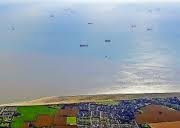
Down in Southwold the hall was packed and the people were in a rebellious mood. Therese Coffey was being held to account for preventing the ban on Russian oil tankers using the bay as a “lorry park” and putting the heritage coastline at risk. Two years ago the ship-to-ship transfers rose from 13 a year to 250. Instead of coming to port and paying harbour fees they transfer oil at sea (Sole Bay is shallow and calm and unhampered by shipping lanes). This is a conservative town but the Tory MP for Suffolk Coastal was given no quarter.

Are you on our side? asked the floor. Coffey slid away from the question. It was clear she was not. It’s becoming transparently clear, in spite of the complexity of most issues, whose side the Government is on. Not the small businesses of local towns, the economy that creates the green jobs that Kerry was writing about, the alternative wind and solar manufacturers (and certainly not the environment), but the oil business, agri-business, the nuclear business. Corporate power. Famously these corporations work by being invisible, but as we come together, as we swarm to defend our colony and our hive we’re bringing to light exactly who and what is raiding it. There’s a buzz in the air. Spring is coming on earth, and not just for the flowers.

Photo: guerilla hellebore; Sustainable Bungay climate action team from left, Daphne, Josiah, Mark, Nick and Lesley. Oil tankers off the Suffolk coast by Mike Page (EADT)

Tuesday, 30 November 2010

Love in a Strange Climate

“Well it’s a community-led response to peak oil and climate change," I said energetically. And the woman looked at me as a great divide yawned between us. We were standing at a stall in a village hall on Energy Day. But I wasn’t selling jam and she wasn’t holding a raffle ticket. We had both just listened to John Gummer MP telling us that wearing woolly hats in winter was a Good Thing and Professor Winter explaining how the least carbon-intensive food you can eat are local carrots. And hey, if you heat your house with your own wood and swap your swanky car for an equally swanky but less powerful car, you can keep within the government targets for CO2 emissions. Both the woman and I realise that neither my words, nor those of the men on the platform, have bridged the vast silence that climate change brings within a conversation.

I had arrived at the stall by chance. One day I went to a documentary about climate change called The 11th Hour and found myself in a theatre full of people who knew that wearing woolly hats and eating carrots alone is not going to do the trick. What all the talking heads in the film were saying was that the way to avert the catastrophic consequences of a civilisation that considers itself separate from nature was to link up with people and find out what you can do. So here I was at the Transition East stall, doing all the things that Transition initiatives round the world do – communicating the bad news and the good news about powerdown. But the one thing none of us had yet done was talk to those people up on the stage, the politician and the professor, the penultimate of the 63 Transition ingredients now being assembled, Pattern 6.1 Policies for Transition.

This month we got our chance. It was called the Big Climate Connection, organised by Stop Climate Chaos Coalition, a group of over 100 NGOs, environmental, faith and community groups. Last year SCC organised The Wave in which 65, 000 people marched to Parliament. This year SCC organised a national lobby of over 190 MPs in the UK. And Michael Uwins from Friends of the Earth in Norwich was on the telephone. "Peter Aldous, MP Waveney is on the Environmental Audit Committee," he said. "We need someone to talk with him." "Oh, Kate will be brilliant at that," I said. "We’re counting on you," he said.

And that is how I found myself with Mark and Kate and Nick and Lesley and Daphne from Sustainable Bungay inside Peter Aldous’s office in the severely downturned seatown of Lowestoft. Aldous was newly elected in May and has just moved in. It was empty and there were only two spare chairs, so most of us sat on the floor. "Do you mind if I eat my sandwiches?" he asked. "I don’t know whether they sustainable or not.”

“Well, they are brown,” I said and laughed.

The lobby was meticulously organised. We were given a lobby pack with instructions on how to set up a meeting and what to say and how to feedback. Top of the agenda was to put forward three "asks" related to the Energy Bill and the UN summit: energy efficiency in homes, a cap on carbon emissions from power stations and support for low-carbon technologies in “developing” countries. (You can read about the meeting in full here).

Talking with politicians is a strange affair. They nod and listen but you never know whether they will act or not. And we are cynical creatures, knowing how politicians are lobbied, courted and heavily influenced by corporate powers, in particular the fossil-fuel industry, who dismiss climate change as a millennial belief rather than a scientific fact. And I am particularly cynical having been brought up amongst Conservative MPS and their grandiloquence. Aldous to our surprise was well-briefed, friendly and generous with his time (one hour). He agreed to all the asks and to follow up this meeting with another in four months time. We covered a lot of ground and focused our attention on the creation of an infrastructure and resources to implement renewable energy and community projects.

Would anything come of this lobby? It’s hard to tell. But it’s what we took part in joyfully and energetically the six of us on the fifth of November, one tiny piece in a vast planetary jigsaw our minds can barely comprehend. To influence the course of history the so-called bottom up grassroots organisations will at some point have to negotiate with the top-down policy-makers. And we’re not well versed in that. We like to have opinions and criticise and pull down, but we’re not so keen on making efforts outside the parameters of our known world. I didn’t want to organise a lobby and was hoping Kate (who is running for the Green Party as a District Councillor and had organised a coach to the Wave last year) would do it. But it ended up being me.

And so I had to read what the Energy Bill was about in the same way I have had to read books about climate science and peak oil, give impromptu seminars on community transport, write about the unpalatable facts of the industrial food system. We have to get smart. And we have to get constructive. Because it’s one thing having a gut feeling about climate change (which most of us do) but if you talk with policy makers you have to have more than a gut feeling. You have to know what you want as a people. You have to be able to put yourself in the politician’s shoes and learn their language and you have to teach them yours. Because unless we start speaking together and forging a dialogue, making bridges across that divide, we won’t be able to see what lies ahead of us and what we can do about it. Because no matter how much we care as individuals or community groups what will really change things is when the active forces within society perceive the real situation together.

For that we have to join those pieces up. And we are going to have to let go of a lot of prejudice and blame to do that, as well as our fossil-fuelled individualism. And we are going to have to start thinking as one group amongst many groups. Because a 100 organisations working as one is an excellent thing for a day. Imagine what that might achieve in 365 . . .

Cold weather, hot climate - view from my window; Sustainable Bungay and Peter Aldous MP; poster of The 11th Hour.

Monday, 14 December 2009

The Butterfly Effect

Last month I spoke to 29 Transition initiatives across the East of England and asked them how Transition was going in their villages, towns and cities, how they began, what projects they were engaged in, what their successes were, what difficulties they faced. Some these difficulties I catalogued in a paper called Transition Troubleshooting http://transitionculture.org/wp-content/uploads/Transition-East-Roundup-Edit.pdf. Later when we met up at the Diss Gathering we wrote our troubles on the wall and then sat down with one another to try and work out a way to proceed. http://www.transitioneast.net/

Looking at these lists you can see the overwhelming difficulties the Transition movement faces lie not with the outside world, but within with the meetings on which Transition culture is based. And now in Copenhagen, “the biggest meeting in history”, where the future of humanity’s culture is based. The question we began to ask ourselves was: are these meetings really a consensus between everyone present? Or are they simply a means whereby agendas that suit the most powerful in the room are agreed?

Or is something going on in these meetings that we haven’t woken up to yet? Naresh Giangrande in his first post from Copenhagen on 11 December http://www.transitionculture.org/ is bewildered and downhearted to see that, in spite of the world’s scientists agreeing over climate change, the rich and powerful are not listening to them.

My hope, my optimism springs from my home, Totnes and all the other Transition initiatives. It springs from the desire and that is apparent here at the people’s conference to create a sustainable world. I feel no hope yet from COP 15. The road from here takes me home.

The problem with the Rich and Powerful is that they are trained to have no fellow-feeling in order to personify huge figures of authority, like small autistic gods. They have been force-fed vast amounts of attention and live in constant terror of being humiliated and annihilated when that attention is removed. As a result they control all reality around them and refuse to acknowledge what is staring at them in the face. How to find a way out of this shut-down will not necessarily be found in the conference halls of Copenhagen.

You might find it somewhere else in the city. Hans Christian Andersen would have no difficulty recognising the situation all of us face. The deaf and the heartless are under the spell of the Snow Queen, he would say. In the story he tells about a sister who releases her brother from enchantment, the tale begins before the children are born, with a “troll mirror” that shatters and scatters the earth. The mirror distorts the world and gives the power of the negative to all those who gaze upon it. When a splinter enters Kai’s eye he falls under the spell of the Snow Queen and disappears from the city. Gerda sets out on a difficult journey through the winter landscape to find him, frozen stiff, on a lake known as The Mirror of Reason.

How do you break a spell? The industrial trance that holds us all captive? The fairy story is clear on the matter. By seeing and feeling who is in front of your eyes. By remembering your heart.

Though the grand illusions of the Western World are controlled by the rich and the powerful, life on earth is underpinned by quite a different story. This year four of us from the Transition Circles– myself, Mark, Helen and Alex - took part in a project called The Dreaming of Norwich and this video of butterflies amongst the buddleia was painted and filmed by Helen.


We had seen the flowers as we went walkabout in the city one Saturday in July. They flourished in amongst all the cracks of the city walls, great fragrant spikes of deep purple and lilac, in bridges, carparks and wastegrounds. We were following the contours of one of the three rivers that flow in and about the centre, dipping our feet in the cool water, skimmed by emerald dragonflies. 2009 was a good year for insects, especially butterflies. One Saturday in August I counted 2oo on the buddleia in my garden.

The butterfly is the universal expression of transformation because during its lifecycle it literally and dramatically changes its form. It’s an image that’s frequently used to describe the process of Transition. You can find it in books from The Great Turning by David Korten to Earthdance by the biologist, Elisabet Sahtouris. In 2007 interviewing a poet from Totnes called Matt Harvey (now the unofficial poet laureate of Transition) I learned a crucial fact about butterflies. Harvey had gone to a butterfly centre and it had transformed his life. He had not known that when the caterpillar enters the cocoon its body dissolves. It becomes liquid in order to transform itself into an imago. Suddenly I understood my life, the poet said. Everything had been collapsing all around me. Nothing was making sense, and I was falling apart. And suddenly I knew why. I was turning into a butterfly.

When the butterfly appears it signals profound change and a vast switch of direction. Its effect was first recognised in chaos theory, where it stands for the small factor that sparks off a radical transition within the non-linear systems of the planet - in the shapes of clouds, the flow of rivers, the populations of reindeer, when one element turns into another. A moment of turbulence in which limit cycles are broken, energy dissipates, structures shift and the planet keeps itself in a state known as far-from-equilibrium, so that life can happen. When the explorers of chaos theory looked at what kept everything in motion they found a shape they called the strange attractor. Drawn by the meteorologist, Edward Lorenz, it appeared like owl’s eyes, like a lemniscate. Most of all it looked like a pair of butterfly wings.

All outcomes of the weather patterns Lorenz discovered depend on initial conditions. Everything that occurs on the planet loops back to initial conditions. How things begin determines how they end - something that indigenous people have known forever, which is why they pay close attention to the creative acts of their ancestors and keep singing their songs, dancing their dances, telling their stories, dreaming their dream. Once upon a time . . .


The old order which the Rich and Powerful represent, which the establishment in all its forms maintains (and our allegiances to them), is the greatest challenge we face in all our meetings, whether in Norwich or in Copenhagen. The transformative presence of the butterfly creates antagonism, stonewalling, denial, dissonance, terror and ridicule.

Above: Lighting a candle for Copenhagen and talking to Sam from Totnes at the 350 Vigil on the Millenium Plain on Saturday's International Day of Protest

The imaginal buds of the new butterfly fail when they first emerge: the great backlash of the caterpillar's immune system destroys all their fragile colour and beauty. At their second attempt however they are older and wiser. They learn to hold the new form of the butterfly by linking up with other buds.

The fact is the world has entered a state of turbulence and the caterpillar is fighting hard to hold on to its territory. Though the Rich and the Powerful and all who serve them resist the emergence of the butterfly, and appear immune to change, they are in fact trapped. They are, like Kai, trying to spell the word Eternity on the ice, heedless to the tears of the world as it tries to melt the hardness of their hearts. They have forgotten the way home. To remember they would have to look into their sisters’ eyes and feel. They know that by this act they would lose the power the mirror has given them and have to return to the humble life of their grandmother’s house in the quiet neighbourhood of Copenhagen.

The butterfly has no power. It carries the colours of the dreaming in its wings and in the shape these wings make in space and time it remembers the infinity present within all finite forms. To know the beauty of the earth, of the real Transition that is taking place we need to relinquish our devouring of the world and go inwards and dream. We have to re-imagine our lives. And as we let our former identities dissolve, our voracious small-minded caterpillar forms, we will start to know ourselves as we really are, to see each other in our true colours:

scarlet admiral
orange-tip
yellow brimstone,
green hairstreak
adonis blue
holly blue
purple emperor
white admiral
peacock.

Monday, 7 December 2009

Waving Not Drowning

A crowd flowed over West- minster Bridge, so many, I had not thought death had undone so many I quoted to Mark. We were passing by the statue of Boudicca raising her spear towards Parliament as our fleet of East Anglian coaches charged onwards towards Hyde Park. We were about to take to the streets as a new kind of blue-faced tribe. Climate warriors battling not just with the industrial wastelands as they encroach upon the earth, but with the denial and apathy of the multitude, unwilling to look, comprehend, feel and respond to the urgent situation in which we find ourselves.

We had come to take part in The Wave, the biggest climate march in history, designed to bring attention to the planetary crisis now about to be discussed by the nations of the world at Copenhagen.At Speakers’ Corner the premise was clear. Climate change was not the only change on the agenda. Under the plane trees the speakers included MPs, Climate Camp organisers, campaigners against the third runway at Heathrow. All of them eloquent and fiery in their call to attention and the issues that brought us together on this day: fossil fuel depletion, resource wars, social justice, green jobs. "I have been speaking to the Native American people in Canada whose lands are being used for tar sands," declared the Liberal Democrat, "I have speaking to the people on the coast of Dorset where the oil tankers are waiting for the prices to rise"(as they are in East Anglia).

"It’s run on love ladies and gentlemen, it really is," said Nick Hutton, treasurer of Campaign Against Climate Change  who, with the Stop Climate Chaos Coalition, had organised The Wave.

As the helicopter roared overhead, the radical roots band, Seize the Day, sang about giving up flying: What will you do, what can we do? Don’t take my wings away.

Sweet Thames run softly till I end my song.

Grosvenor Square, historic starting point for all great marches, was filled on all sides with blue people: blue wigs, blue dragons, blue faces. We moved slowly and inexorably through Mayfair and down Piccadilly. My feet knew all these streets. I had walked them, cycled them, taken underground trains below them night and day, as a child, a lover and a journalist and now almost a stranger. I walked past magazine offices I once worked in, danced a jig to the SOAS samba band in front of Fortnum and Mason where my grandfather used to take me for tea. I knew the kinds of changes that were being required from a city-shaped people. It wasn’t just about turning down the thermostat, it was about giving up an exclusive way of seeing and experiencing the world. Letting whole histories, whole parts of yourself go and letting something else sing inside.

I wore a rainbow hat and stood between the statue of Winston Churchill and Big Ben and watched the crowd as it wound its way down Westminster, over Vauxhall Bridge, past Lambeth Palace and back again in a great aquamarine loop. The people had come from all over the country, from Southampton, Birmingham, Cardiff and Poole. There were people in Transition, people on cycles, grandmothers in blue hats, babies in shawls, monks and priests in habits, young anarchists dressed as bankers.

"You’re on a march", said the policeman to a young couple, "you’re supposed to be shouting!" "What do we hate? Climate change!" chimed some children melodiously in response. It was a big march but it was a mute march. The ready-made placards supplied by the Co-op and the various charities and NGOs said it all for us: Power to the Poor (Christian Aid), Act Fair, Act Fast (the Co-op), Our Climate in Our Hands (Cafod), Capitalism Means Crisis and Climate Chaos (Socialist Worker), Carbon cuts, Not Welfare Cuts (Green Party). The buildings stood impassively as they have stood for centuries. At three o’clock there was a great shout as we did The Wave all together, and then we started to go home.

It was hardly reported by the papers. A massive taking to the streets by 50,ooo people. Was that the media or was it us? Is it that we have no way of communicating the complexity of what is being discussed at Copenhagen? Is it that "the scientists" seem to hold all the data (or not) and the corporations all the power, that ordinary people, united in that moment by the colour blue, have nothing crucial to add? Or is that that the words themselves we are using are inadequate to express what we feel? All these well-spun, marketed, corporatised, psychological, tele-texted words? The demonstration had none of the raw angry edge I remembered from the 70s - strike marches or Anti-Nazi League gatherings. There were no police charges or wild breakouts. It was perfectly orchestrated, without an enemy in sight - unless you can count a bunch of buildings by a river as an enemy.

A woman once asked the Native Americans of central Canada what they could do to help solve the problems about their land. You could start by realising you are the problem, was the reply. How can you march against yourself? Your neighbour, your friend, your own children?

Something else is required of us that is far subtler and more intricate than a public demonstration that depends for its energy and impact on black and white, Us and Them antagonism. Something like the decision the singer made when she gave up flying and realised she couldn’t see her grandmother in America and her sister in Australia again. What people used to call a sacrifice. A giving up of what you love for life itself.

DA What have we given?


Whatever happens in the conference halls of Copenhagen as the minds and wills of the world’s governments argue about figures, this is the kind of change the planet is really requiring us to undergo. A radical shift of attention, a sea-change. A decision that can only be made deep within the chambers of the heart.

Images:: Mark at Grosvenor Square.With the Climate Emergency banner at Speakers Corner; marchers and banner at Parliament Square
All pictures by Mark Watson. Further pix available by Josiah Meldrum (TN2) on http://tinyurl.com/ye2xjvv