Showing posts with label transition free press. Show all posts

Monday, 16 March 2015

Flat Earth News

At the end of last month I went to the Real Media Gathering in Man- chester to meet up with fellow forgers of UK's grassroots media. Here are some reflections on the event, as Real Media's first campaign kicks off this week. Originally published by the innovative Independence blog, Bella Caledonia, this is the slightly longer version of the story.

‘It’s tragic,’ said the traveller, staring at the teaser on the front page. The news was all over Euston Station. A huge screen by departures was proclaiming the end of the world as we know it:

Mr Spock is dead!

‘He was 83,’ I responded as we stood by the newspaper rack at WH Smiths.
‘I was shocked,’ he said. ‘I thought he was going to go on forever.' 
‘No one is immortal on this planet!’ I laughed, and went to board the 0800 to Manchester Piccadilly. I was heading towards a convergence of journalists responding to the call for a ‘Real Media’: to cover what is happening on rather more grounded territory - Britain in 2015 in the run up to The Election.

Real Media describes itself as a ‘series of events and actions to campaign against media distortion and for independent grassroots journalism’. It has been set up by RealFare, a project that aims to challenge myths about the welfare system and this gathering is its kick-off point.  In a similar way that UKUncut brought  corporate tax dodging to public awareness and the Occupy movement the corrupt banking system, Real Media wants to expose the hyperreal, hostile nature of the press that distorts rather than reports on the reality we live in.

Aside from this gathering there are two actions this month: a national Anti Daily Mail Week from 13-20th March with online blockades, subvertising, protest and parody, followed by Occupy Rupert Murdoch Week from 22nd-29th March, organised by Occupy The Media. The week will include art and action and is being brought right to Murdoch’s door: his News UK headquarters in London Bridge. A full website will be launched in April.

The gathering taking place at the Friends Meeting House is framed by an opening and closing plenary, with workshops, films and discussions throughout the day. Networking is at full tilt, as I arrive with a bundle of the final issue of Transition Free Press under my arm.

As the speakers open the discussion it becomes clear there are there are two big challenges ahead: one is to call ‘Big Media’ to account, to make the reading/watching public aware that their news is highly manipulated in favour of the five billionaires who own 80% of its production.

The second is to build an alternatively-structured, collaborative media that will include the voices of people who are blocked and left out of the debate. If UK news coverage is ‘shallow and corrosive’ as described by radical US journalist, Glenn Greenwald, our task is to deepen and broaden it, to make our media both people and planet-friendly.

It is a producer problem for sure - subjects such as climate change, social justice movements, the fate of the unemployed or asylum seekers, are commonly bypassed or misrepresented. But it is also a consumer problem. We are addicted to processed news. 

Like junk food, we know junk media is not good for us, yet find ourselves lured into the ghost trains and freak shows that beckon us at every newsstand or website sidebar. Flick me, click me, now! How can we kick the habit and instead feed our minds and hearts with empathic stories and intelligent debate? How can we see the Earth, not as a battleground, but as a common ground for human beings and millions of other species coexisting, all with limited lifespans?

seeding the future


The media, like all British instit- utions, thrives on humiliation. And the prime way to avoid humiliation is to humiliate someone else you consider lesser than you. What would a new media look like that doesn’t tap into the fury that lies beneath an institutionalised powerlessness? That recognises that the pecked chicken in the corner is not the problem, but that we all are cooped up in a  henhouse, and this is not how we are supposed to live?

What would a media look like that is not owned by oligarchs, where editors are no longer ‘content managers’ or  papers ‘products’ and a dead actor with alien ears the headline of the day?

In the hallway and networking rooms of the Friends Meeting House the signs of it are in the air and on the table: new cooperatively-run, people-owned  local papers such as Birmingham’s Slaney Street or The Bristol Cable. The strong intelligent editorial of The Occupied Times, that first went on sale outside St Paul’s in 2011, with its distinctive black and white style. International on-line and print magazines that operate without advertising, such as the New Internationalist. Publications that train people to become citizen journalists like Manchester Mule, or STIR magazine based in Dorset; crowdfunded journalism such as ex-Guardian political commentator, Nafeez Ahmed’s Patreon platform. Independent writers, editors, broadcasters, new wave techs and a few Fleet Street vets, like myself, all happy to share their knowledge and skills and experience.

Which brings a third challenge into play: finding ways to cohere our different outlets into a meaningful and stable network. In a media monoculture news is easy to co-ordinate. McMedia can be sold anywhere. It looks and tastes the same: the same press releases and think-tank reports, the same agency photographs, the same levels of antagonism in columns and headlines, just reworked into different house styles.

However a diverse, cross-cultural media doesn’t look or feel like this. It might be grainy instead of glossy, but its headlines don’t scream at you or twist your guts. In conventional media, the reader is irrelevant, except as a consumer, mostly of the advertising which keeps its papers, websites and channels financially afloat. In Real Media however the reader is a key part of the communications system: they are the story that is being written and, in many cases, they also fund the paper or platform they are reading or listening to.

The only free press, as OpenDemocracy states, is one paid for by its readers.

Paying the piper


No media outlet is cheap to run. In-depth investigative reporting is expensive not least for the legal fees it can incur. Most people are unaware of how much journalism costs to produce both in terms of effort and finance, and give it a poor level of value or trust.  

Conventional journalists however don’t have to think about where their salaries or readership come from. Unless they bump hard against the system, as the Telegraph’s Peter Oborne did recently regarding HBSC, reporters rarely consider the pernicious influence of advertising on editorial, or the dissonance that arises, for example, when companies like Unilever sponsor environmental pages in The Guardian.

In alternative media you have to think about these relationships: you become an entrepreneur as much as a reporter. You have to juggle the demands of sourcing ethical advertising, subscription schemes, crowdfunding and funding from progressive charities, such as Network for Social Change. None of these are secure outlets. Most ‘alternative journalism’ doesn’t pay either its contributors, or its editorial staff.

So the way forward for many publications, both on-line or in print is through donations: to build a dynamic economic relationship with their readers, which is how the new media platform, Common Space, launched through Common Wheal, has been able to fund its team of reporters. In England, we are highly aware that the Independence movement has radicalised a large section of society that had never had been involved in political discussion before. It has helped to redefine democracy as a people-led movement, rather than a battle for power and privilege in the corridors of Westminster. - and Common Space can be seen as a direct reflection of that engagement.

But how can a left-leaning press alliance get this kind of new thinking out to people who may lean in other directions? ‘We don’t want to be in an echo-chamber, talking to ourselves,’ Common Space’s editor Angela Haggerty stated.

Answering questions from the floor about dealing with disenfranchisement among fracking protesters, or within Muslim communities, she advised: ‘You have to confront the argument and be prepared to explore it properly.’ Most of all you have to listen and allow enough space and common ground for everyone to be included.

This is a very different position from conventional journalism which stands apart from the subject it is reporting on. It is a stance that demands far more than an ability to ask awkward questions and make the deadline. To stop sliding into the Us and Them rhetoric that typifies Big Media, we need to ask ourselves those kinds of tricky existential questions that have been arising in the backrooms of the Friends’ Meeting House on this rainy afternoon. 

Who are you reporting to, and for whom?

Whose side are you on?


Everybody knows the boat is leaking


Everybody knows , as Leonard Cohen once reminded us, but few of us speak with one another as if we all know. Everyone knows the system is rotten but carries on reading papers that say that the shiny world they showcase is going to last forever. One of the reasons for the Big Media clampdown on dissent, explains Ahmed, is because of the systemic crisis we are facing – political, financial, environmental, social – is signalling that the system itself is dying.  

‘Fundamentally our planet is owned and controlled by a tiny elite of people who are exploiting the commons for their own benefit.’

If everybody knows that fracking contaminates water tables, that Amazon doesn’t pay its taxes, that ‘divide and rule’ is the tactic employed by all bully-boy Empires, a key move we need to make as citizens and communicators is to speak to each other from that knowledge, and frame our media likewise.

One thing lies in our favour: what drives every journalist, no matter who  they work for, is neither money, nor corporate control; it is the story. And if that story is no longer illusion or propaganda, but  embedded in the real lives of people, reporters will have no choice but to go out there and find it.

Everybody knows the captain lied.

That story is us. Time to start writing it. 

Find out more details at the Real Media website. Occupy the Media website can be found here, with details of events and the Charter For a Free Democratic Press.

Photos from Real Media Gathering by Fields of Light Photography; issues of Slaney Street; poster for The Bristol Cable's first annual meeting

Thursday, 5 February 2015

Farewell My Lovely

Yesterday I closed the paper. It was a tough decision and threw many un- answered questions into the air: about the limits of agency within grassroots and progressive culture, about how media is valued, about 'sustainable' livlihoods, about those who forge and record the 'beautiful solutions' in a time of collapse. We received some wonderful and heartening responses from people who have been involved in the project since it first began in 2011 - from fellow activists/writers/distributors and Transitioners. For me those relationships, as well as the integrity and coherence of the paper, made it a worthwhile project to devote many many long hours to. Here is my last post on our website:

Dear Readers and Supporters of Transition Free Press,

I am sorry to inform you that our innovative grassroots newspaper will not be published this year. We were hoping to relaunch this Spring with a bright new expanded edition but have been unable to raise sufficient funds to pay for our core costs.

For the past three years we have produced seven issues, all of which have documented the actions, skills and intelligence of Transition and affiliated progressive movements. Our purpose was to reflect the cultural shift many of us are involved in and to act as a communications tool for Initiatives and groups. Thanks to over 150 contributors, over 100 distributors, 50 advertisers and a collective editorial team, over 70,000 papers have appeared all over the UK - in shops, in cafes, universities and libraries, waiting rooms and market stalls. At public events and in private moments.

We have never been at a loss for material. 

TFP_Advert_STIR_Final Running newspapers is hard work and it was always our intention that TFP should be a co-operative social enterprise that paid people for their skills and dedication. Backing from a crowdfunding campaign and grants from Network for Social Change and Transition Network has given us time to build up a social infrastructure, with the aim of eventually becoming a self-sustaining enterprise.

However to become a sustainable business involves a paradox. Even though our editorial might challenge a 'growth-at-all costs' culture, we ourselves needed to grow massively to keep going. We needed to sell tens of thousands more papers, charge much more for them, dedicate more of our pages to advertising and find hundreds more subscribers. And fast.

Image1507 At the end of last year we did (finally and happily) succeed in finding funds for two of our proposed 2015 issues. but not for the whole year. To fulfil our obligations to become 'financially sustainable' meant we would have needed to make at least £20,000 pa profit to pay our core costs, and if we wanted to pay ourselves the minimum wage, over £30,000.

This was beyond our capabilities. We have always covered our production costs, but have never made the kinds of sums that make business sense. So even though the big picture public debates, from the May elections to COP15 in December, probably need the presence of a free press more than ever before, TFP will not be there to discuss them. Nor will we be there to record and celebrate the small events, actions, gatherings, projects, productions and conversations that make up the grassroots culture of a world-in-flux.


As the paper's editor and co-founder, I had hoped we could make a livelihood from our professional work within Transition. However, I now realise that for that to be the case independent journalism needs to be held in far greater esteem than it does at present. It has to matter there is a free press, that what we write matters, that our voices be heard. Because until our words are given space and attention the new story of community and collaboration everyone is waiting for will not be told.

I hope that new alliances, such as Real Media (see Amy Hall's post here) will demonstrate why the future needs a people-friendly, Earth-friendly media and that TFP's contributions and insights will have helped make that happen.

Meanwhile, dear readers, thank you for supporting us during these years. Thank you especially to our contributors, our subscribers (whom we will be refunding) and also our loyal distributors who, sometimes against the odds, have kept selling the paper to their communities. Thank you to my fellow writers, editors, designers and managers at TFP. Thank you all for your generosity, creativity and for giving it a go.

With best wishes, Charlotte Du Cann

484997_460945680613821_965150950_a Images: Charlotte Du Cann (Editor) reading TFP3; Trucie Mitchell (Designer) reading TFP2; our first reader on the train, reading the preview issue: Mark Watson (Distribution Manager) reading TFP4

Sunday, 12 October 2014

DANIELLE PAFFARD: on radicalistion, austerity and making fossil fuel industries feel out of date

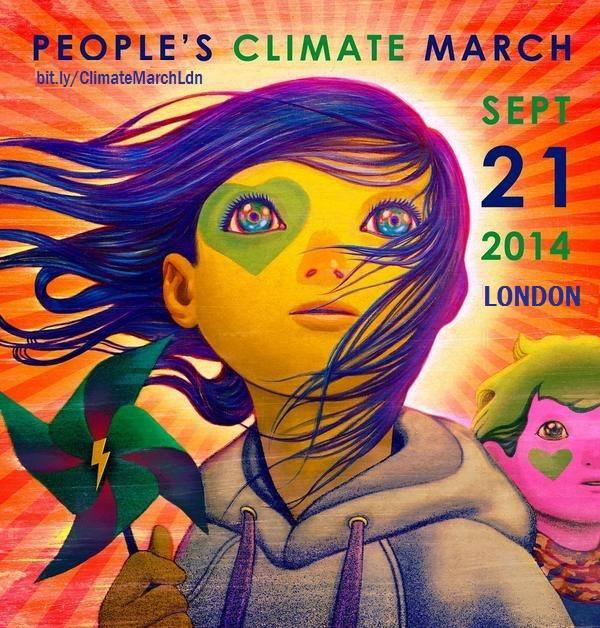
In a month of climate actions and demonstrations from the global People's Climate Marches to No to TTIP and Global Frackdown here is the autumn Transition Free Press profile of activist Danielle Paffard. Each issue I interview people who are key to an understanding of and manifesting 'Transition' culture. In past editions these have ranged from Mark Boyle on the philosophy behind gift economy to George Monbiot on rewilding our neighbourhoods and imaginations. The interviews are often long and intense, though the space in the paper only allows for core extracts from our conversations. I begin with a few key questions and let the story unfold...

What makes an activist? And what effect do actions take in shaping our cultural narrative?

Danielle Paffard helped start up the highly influential campaigns UK Uncut, Move Your Money and No Dash for Gas. How did she get from being ‘relatively unpolitical’ to becoming the new UK divestment co-ordinator for 350.org? 

“I studied the environment at university and came out feeling there was a huge problem, but also feeling totally useless and unable to contribute. 

“I came across Climate Camp and went from being quite anti direct action to meeting these amazing activists. Two months later I was locked to a coal-fired power station, shutting it down from the inside. That was a really transformatory experience and formed the founding principle for most of the activism I’ve done since: you find a group of people you can work with and who inspire each other. 

“Then in 2010 there was a change of government. When the Spending Review made it clear just exactly what this new government was about another radicalisation moment happened to me. 

“One of my friends said: if we just keep on marching from A to B listening to Tony Benn speak, we’re going to lose. We need something that’s more feisty. 

“The next day he found a small piece in Private Eye about how Vodafone had avoided £6 billion worth of tax and he made the link: ‘Look, if we’re losing £6 billion from one company that could cover almost the entire issue of the cuts, how are the government getting away with this austerity narrative?’ 

“UK Uncut started at Vodafone’s flagship store in Oxford Street, using the direct action skills we’d learnt through the climate movement to highlight the falsehoods behind austerity. 70 people shut down the shop. By that weekend there were 30 more actions around the country. 

“This was when Occupy was starting up and there was a huge anger with the banks and the bailouts. But, though with UK Uncut we targeted high street banks with our actions, it was hard to break through into the more systemic problems around banking.


“It was unexpected and exciting and had a key role in changing the awareness of tax justice in the UK. 

“At that point I banked with HSBC, who fund the world’s biggest coal mines. It had been on my to-do list to change, but it wasn’t in my diary. So we came up with actions to motivate people to close their accounts.” 

“And so with another group of friends we set up the Move Your Money campaign, which was about very publicly moving your money away from the big four banks into more socially responsible alternatives. 

The blockades to a just transition are due to the political power of the fossil fuel industry” 

Danielle’s next move however was far away from any high street: with 16 others she scaled a 300 foot chimney to protest about the building of new gas-fired power stations in the UK. 

“The platforms at West Burton were about five metres from the top. Once we got on there we blockaded the access points and dropped a hanging tent down into the chimney. So they had to turn the power off. And people took it in turns to sit in that tent. It was November and really cold. 

“We delayed work for a week and stopped 20,000 tonnes of C02 from being released. EDF tried to sue us for £5 million. The public reaction was extraordinary. 65,000 people emailed EDF to drop the charge.” 

As a result many climate activists were reinvigorated and the Reclaim the Power event was launched at the Balcombe anti-fracking camp in 2013. Paffard is now to be found behind the scenes as divestment co-ordinator for the climate action organisation, 350.org: 

“We’re working on ways to stigmatise the fossil fuel industry sufficiently to unblock the political process. It is so weighed down by the fossil fuel lobby we are struggling to get the meaningful decisions we need to do something right on climate.
“My role is to work with the existing campaigns – the university campaigns organised by People & Planet, Operation Noah who work with faith groups and the fossil free health campaign, started by Medact, who have just got the BMA to divest. I am also helping to encourage small independent local groups to get active in their communities, on their own councils, and get them to debate publicly whether public money should be going into fossil fuels. 

“If councils don’t have investments in fossil fuels then they’ll be very quick to tell you. And they will do, because everybody does. We’re working on tools to make it easier for campaigners to find that information out, looking at pension funds because that’s where a lot of the investment money is.”

Do people say to you: It’s all very well to divest, but what’s the point if we’re still using oil, coal and gas?

“We are very focused on divestment, rather than personal consumption. It’s very hard to make change until the political power of the fossil fuel industry has been significantly dented. Incentivising clean technologies and getting the investment we need to really transform our entire economy, are blocked by these incredibly powerful industries. And while individual action is important it isn’t going to take down the fossil fuel industry as quickly as it needs to be.

“Until we get massive investment in public transport or incentives for renewable energy, it’s going to be difficult for people to make meaningful enough consumption decisions to change the economy.

“Much of the discussion is now about the social value of investments. The recent Law Commission’s review questioned whether it is right that ‘fiduciary duty’ should just mean short term profit for shareholders. Should it include long term stewardship of both your money and the planet? The fact these questions are being discussed is a really important part of the narrative.

Do you see a relationship between Transition and the divestment movements?

“If you don’t have a Yes, then it’s much harder to push the No. If we’re going to deal with the climate crisis we need to shine a light on all the community projects that are working, so they can be rapidly replicated and supported to make change happen.

“Divestment could be a really interesting project for a local group – because it is about democracy and local participation in decision-making about where public money should be invested. Using the divestment campaign to build a community to do more of the Yes work on a bigger scale.”

Activism typically deals with heavy-duty issues. How do you keep going without being burned out, or oppressed?

“I go running!“ she laughs. “I think it’s about having a good group around you, who can talk and offer support. Also one of the reasons UK Uncut was so successful was because it challenged these big problems and organisations in a fun way.

“So whether you are talking about Sure Start centre closures, by setting up a crèche in an HSBC bank, or running sports days in Top Shop, activists know it’s important to make sure that activism is fun and engaging, because in the end if it’s not, we can’t keep on doing it.” 

Taking part in an Art Not Oil action at The British Museum, 2010; Danielle Paffard; UKUncut Top Shop protest in Brighton; 350.org's carbon bubble for global People's Climate March, 2014

Monday, 1 September 2014

Doing the Butterfly Shift - new edition of Transition Free Press out today!

TFP06_2014-09_CoverToday is publication day for Transition Free Press No 6, one of the big deadlines I've been working towards this summer. Now distributed to UK Transition initaitives and posted to our subscribers we've also just gone on line.

Some highlights include: Tom Crompton on intrinsic values. 350.org's Danielle Paffard on being radicalised. Rob Hopkins on telling the story of Transition through brewing, Kate Rawles on seakayaking; plus standing alongside First Nations, foraging for scarlet mushrooms, saving seeds, fermenting rose petals, getting to the root of plant medicine, getting into maker spaces and most of all tuning into the zeitgeist which this autumn all about climate action. Here's the editoriial I wrote on behalf of the TFP collective.

This changes everything


There is a story that has sustained us through these changing times: it’s known as The Butterfly Shift and is based on the biological transformation that happens when a caterpillar turns into an imago. At first the immune system of the caterpillar defeats the ‘imaginal cells’ of the new form. Then the cells re-emerge, but this time hold fast by joining forces.

The caterpillar is the dominant narrative of Industrial Progress, chomping its way through the planet’s ecosystems, and the governments and corporations who follow the ideology of ‘free market fundamentalism’. “Our economic model is at war with life on Earth,” as Naomi Klein says in her new book This Changes Everything: Capitalism vs. the Climate. It’s also at war with every emerging butterfly that stands in its way.

One of the inspirations for Transition Free Press was The Occupied Times and the conversations that many Transition groups were having with local Occupy camps in 2011. The media we wanted to create would cohere the ideas and actions of many different grassroots enterprises under one colourful wing.

So true to its original blueprint, our autumn edition focuses on the people and communities everywhere who are resisting the assaults of the global caterpillar and at the same time making steps to transform our culture into something completely new. Because, as Klein clearly states: “Climate change isn’t just a disaster it’s also our best chance to demand and build a better world”.

BonnéMirko_portrait_c_sabine-bonné_schoeffling-und-co_honorarfrei_KLEIN-1024x682
 In 2012 Occupy tents were torn down, Transition Initiatives ‘burned out’. We realised that raising awareness and planting radishes in our windowboxes was not enough. We had to start up collective projects in the real world. We had to change the story and use words as they were originally meant to be used: as a medium for connection between us; a reminder of what being human really means. That, as storytellers and change-makers, we need to keep the door open in a time of cultural lockdown.

In this sixth issue you can find our signature mix of the practical, political and the philosophical. In line with a renewed push towards climate action this autumn, we’re focusing on fossil fuel divestment and climate activism. We are also showing how the humble acts of fermenting cabbage and saving seeds are also radical acts of liberation, why in the face of increased corporate control we are out digging fields, brewing beer, helping our neighbour, telling our own story, doing art in whatever place we find ourselves:

Bv5LwwiIUAAdk4bBecause Transition is not just in what we do but how we do it. The caterpillar mindset is cold, unkind, and solitary. The future of the butterfly is warm, open, spontaneous. It works together with its fellows and is at home on the Earth. When activist Danielle Paffard describes taking part in the Viking protest at the British Museum, you can’t help noticing these ensemble acts embody a certain intrinsic spirit: they're witty and colourful and alive, and when they take place everything else feels gloomy and somehow out of date.

“One of the most amazing things was this song which everyone was invited to sing. It was a way for people to engage, but it was also really beautiful. It wasn't what people expected of a protest. That song changed the dynamic of everything.”

Because it’s not just about listening, it’s also about singing. When you do, you’ll find you are not on your own. We are all out there.

This Changes Everything by Naomi Klein (Allen Lane) will be published on 16th September; Mirko Bonne, one of the five writers on the Weatherstaions project, Free Word Centre: gathering beetroot at Leigh Court Farm, Bristol, from the documentary Voices of Transition (photo: Milpa Films)

Sunday, 17 August 2014

This summer I went swimming . . .

Dear Reader, I have not abandoned this blog! I have been inundated with editing stuff for three big deadlines this high summer: the book Playing for Time (now at the publishers), the sixth edition of Transition Free Press (going to press on Tuesday) and Dark Mountain 6 now in production.

In between I have been sneaking out to the beach to go swimming, digging the garden, and foraging for plums and cherries. And in the long warm evenings drinking a glass of one of Mark's luminous herbal refreshers.

Above is one of the radiant daybreaks of the year - Lughnasa down at Southwold. And below is me emerging from the River Waveney at our Sustainable Bungay annual picnic in the pouring rain.

"We are resilient in the face of climate change! I called out to bemused tourists in Falcon Meadow, as we tucked into our low-carbon lunch and Nick's awesomely strong parsnip wine.


Normal service will be resumed in September Have a good month everyone!

Monday, 7 July 2014

ARCHIVE: When the experiment fails

This piece was originally written for Social Reporting Project, as part of a series looking at the 74 Transition Ingredients and Tools in The Transition Companion. Looking back at six years in the movement and now editing the sixth edition of Trnsition Free Press, this still seems a key subject. We think of Transiton as a thing, a goal, a perfect state, when it is process, something you go through and experience with others:, some of it painfully, some of it joyfully, some of it yawning and wishing the meeting would come to an end. Creativity is often the only meaningful way to navigate its existential territory.

I was going to write about Communicating with the Media, a nifty tool in the second section of The Transition Companion. I planned a practical exploration of the business of writing press releases and cultivating a positive relationship with local newspapers and radio. But then whilst Becoming the Media - creating the preview issue of the Transition Free Press - I stumbled upon a subject which was closer to home, nearer the bone. More urgent, I reckoned, than raising awareness of our local projects in the mainstream press.

The title of the second chapter is Deepening, and contains some of the harder aspects of Transition. The start up phase of initiatives is often exuberant and exciting. People are attracted to the buzz, full of hope and expectation. They stand up in rooms and declare what we (you) could do. Deepening is when you first hit the wall. Ideas and fancies about downshifting turn out not to be the reality of downshifting. Those big words fade in the light of day. You realise that you have to get on with the people in the room and do the work. Power struggles happen in deepening. Things don't go according to plan. People leave and let you down. You let people down. It's awkward because you don't know anyone in your fledgling initiative that well. The groups start to falter. What do you do?

Celebrating Failure is perhaps the least understood ingredient in the book. Because we live in a culture of success. No matter how we talk about losing being part of the game, it's still losing. Victors take all, stand on the podium crowned with laurels, king of the castle, biggest banker on the block. No one wants to be in the beaten team, on the bottom of the pecking order. But to be in Transition means we have to understand this win-or-lose mindset as an old order we need to transform.

Interviewing Shaun Chamberlin for the paper, he talked about the new book, The Future We Deserve, in which 100 authors write 500 words on their take of the title:
What was interesting in it was dissensus. The recognition that Nature doesn't decide by consensus on the ideal life form before it creates it. It just creates and creates and some things work and some things don’t work and I think Transition follows that “dissensus” approach - we don’t try and have a universal plan for everything. If someone wants to do something they go and do it. As Rob wrote about the punk ethic (here's three chords, now start a band): Here’s three ingredients, go and start a Transition initiative. That is that creative energy that underlies dissensus. Let some of the projects that we undertake thrive and let some of them die and don’t feel that everything we do has to succeed.
In a creative frame, you try everything. You start with the idea of communicating some key tips about the media but then a more pressing subject comes up. So you change direction. From the creative perspective everything is material. There is no loss or failure. You carve your piece out of the mud, the clay falls to the ground, you sweep it up and use it again another time. Nothing is wasted. Everything is compost and you need that compost - those past events, meetings, open spaces, clashes, those wasted leaves, those dead heads. You need that stuff to rot down in order grow nourishing and beautiful flowers for the future.

In Deepening all the expectations of how life should be come up for examination, and it is wise to know Transition is not what you think it should be at all. But of course you don't read the manual. Your ego hits the wall, you are challenged in all directions. Most people at this stage, rather than let go of their defence systems, or their lifestyle, leave and blame Transition for not living up to their shiny idea of it. That's not the failure of Transition, it's the challenge of our society. We don't live with the messy paint box of dissensus, we live in the pure and airy ideals of the mind, and the vicious battleground of the will. I do it my way. Publish that email and be damned.

If we had heart we would realise that everything we do in Transition is to create a future that is not apocalypse, and in many ways we are blind to what this might look like. We are feeling our way ahead and "failures" are merely telling us that some paths are the ones we don't need to go down. Try again. Move your attention somewhere else.

Valuing experience

OK, so this is the theory. What about the practice? In 2009 I helped organise the second Transition East gathering in Diss and before the event interviewed 29 initiatives on the phone. I collated all the information and posted it on a regional blog. I asked everyone the same questions. How were they doing, how many people were in the initiative, what kind of town, village were they in etc? Everyone cheerfully answered the questions. Do you have any difficulties? I then asked them. There would be a hesitation and then suddenly a huge outpouring would happen. Ten minutes would turn into an hour. Up until this point no one had mentioned dificulties. We weren't sure how to handle them. But the fact is the difficulties were not "wrong". They are our experience of change, how we know what to focus on, and what not.

Today many of those initiatives do not exist. The initiative I have been in (Norwich) is a shadow of its former self. The 14 groups that began so exuberantly after our Unleashing in 2008 no longer exist. The core group disappeared. The Heart and Soul group faded away. In April the monthly bulletin was not sent out, as it had been for the last three years on the first of every month. No one noticed. Or if they did, they did not say anything.

What does this tell us? Some territories are not fertile ground for Transition. Something holds groups together and if it's missing the group will disband. At some point you realise that you need to put your time and energy into projects that feed back, and not just because you can do them or that you are expected to. You need to go with the spirit of the times, be amongst people who understand that the project matters. That communication matters. That Transition is not a hobby, a once-a-month feel good community thing, it's for real.

Some of this stuff is bitter stuff to swallow. And we don't like bitter, we like the sweet and sugary things in life, the triumphs and the happy moment. But bitter, as all medicine people will tell you, is the taste of the heart. It's what tells you what is good and not good for the system, how you grow up and take responsibility for your actions. How experience teaches us to shift out of being the haughty me-against-Them people who want to rule the universe and become fellows with all beings on the planet.

The loss of these groups told us that power struggles are not for the future, nor is old-fashioned spirituality, hierarchy of any kind, hostility or control. It taught us that you can't really co-opt the future. It doesn't belong to big business or to the institution, and it will slip out of the Empire's clutches at every turn. In Norwich we learned that our Transition Circles brought a key aspect into the fabric of Transition - personal carbon reduction. We have one circle left still meeting, but the legacy of all that great experiment lives on. It's in the comments pages of the Transiition Free Press, it's in the interview with Shaun Chamberlin. It's just taking another form, working with a new mix of people. No blame. No loss. No failure. Just celebration.

P.S. There is only one real tip I would add to the media tool in the book and it's this: journalists are people and finding the story is what we really care about.

Photos: Untitled piece by Maria Elvorith for the cover of The Future We Deserve; Banner for February edition of Transition Norwich news bulletin; Transition East Gathering 2009 at Diss; with Alexis Rowell, News Editor of Transition Free Press (photo: Sarah Nicholl)

Friday, 28 February 2014

The Free Press Gang

I should have started writing this an hour ago. I awoke in time, but I was listening to the world outside as darkness shifted into light. The stars drained from the sky, a vixen yipped, an owl called among the trees. It was silent for a while. Then it happened: a small sweet sound in the moment that Latin America calls the madrugada, the time just before dawn, and I knew it had begun. And there is such a feeling inside when you hear it, one bird singing after another, all calling out: Spring is coming, Spring is coming, I am here! Are you?

I wish I could convey in my human words the sound of the robin redbreast, as he starts up the chorus, the bird that sings through the night and through winter, against all odds and heralds the day. But you know, some things you have to experience for yourself.  What I can tell you is that soon the chaffinch and the wren will join him, and in March the blackbird too.

You see you think writing is a solitary thing but it isn't. If you sing in a choir, play ball, act in an ensemble, write, as I do for a small Transition newspaper, you know that being part of the chorus is everything.

we have to talk about comms
The dawn chorus is a song that has been going on for millions of years. It begins as the sun lights up different parts of the globe and it never stops. That's something I learned from an artist called Ansuman Biswas, whose project, Far Player is part of the book I'm editing about Transitional arts practice, Playing for Time - Making Art as if the World Mattered.

Voicing who we are and where we are in time is part of being human. For thousands of years artists and communicators have sung in the day, we've sung praises and lullabies, shared stories, and learned, through the art of writing, how to convey our thoughts and feelings across the globe. But equally as people we have been silenced. Our voices have been crushed and misshapen by a succession of Empires that have attempted to control us. Now, as we struggle within the modern vice of corporate-controlled media and marketing, many of us want to explore and voice another sound, another story. One of those stories is about the Transition movement, in essence how we, as a people and as a network, respond to the triple drivers of climate change, resource depletion and economic breakdown.

For this however, we need to talk about comms (as communications are referred to in modern organisations) because although human communication is a bio-diverse, multi-levelled exchange it is frequently treated as a monocultural one-way broadcast (I am getting my message across to Them). Sometimes it is presented as a dialogue (you can give your comments on My Message, or you can tell me how I should be communicating and I will incorporate your ideas).

But the fact is none of this is really communication: it is control of information, and you can't have communication and control in the same place. Communication is a subtle thing: you can say or write beautiful and intelligent words and yet if you have no fellow feeling, no desire to make contact, to connect, they fail utterly as communication. Likewise, if the people are not open to receive what you are saying, it also fails. Sometimes the lack of connection is because none of us really care. And sometimes that lack is due to the silo conditioning that we have all been brought up in.

For a long time, let's say almost four years, I wrote hundreds of blogs about Transition. I wrote them as part of this project which I started up and edited from 2011-2012 and as part of the Transition Norwich This Low Carbon Life community blog which ran for every day for three years. I've written news bulletins and press releases, a column for the Eastern Daily Press, a quarterly newsletter for my own TI, Sustainable Bungay, magazine articles, thousands of tweets. And all of this you could say was a way of communicating Transition. But nothing has got near to the project I am now part of, editing Transition Free Press. Because this is a publication in its own right: it is not part of a corporate strategy, or a mainstream business. It is pure editorial run by seasoned Transitioners, and in a time where the media is controlled every which way by government propaganda that is an extraordinary thing.

You can write deeply and passionately, as I found out, in a blog, but they all (including this one) only go one way: down the page. And so rather than go deeply and passionately into 'comms' and how it has or has not worked for me, I want to talk briefly about why I feel the paper reaches places other comms does not, and how writing can teach us how to live in a co-operative universe. Here are four small keys:

Latitude OK so the paper goes across, rather than down, and it is all in the same place, physically, in your hands at one time. You open at the News and end at Sport, and in between you flash past every subject Transition engages in: energy, grassroots democracy, alternative currency, CSAs, community arts, wellbeing, people, projects, plants, places . . .You can in the space of a few minutes flick through 24 pages and see what Transition means as a culture, a whole new way of living on the planet. It's a multi-voiced operation. It's a We thing. During the pilot over 100 contributors wrote stories, telling us about their projects, writing them from the field, from experience. Here I am! Here we are!

So Latitude means that in Transition you need to have all these subjects at your fingertips from the big picture to the small detail: you have to know about fracking and you have to know how to split logs. You're smart, practical, love the earth, work with your fellows, and most of all you love to listen and give value to other people's stories, as well as speak about your own. You might not know how to run an alternative currency in your own neighbourhood, but you know the people that do, you know how it works. You know that it matters.

Attitude You have to know the reader is not the enemy. The reader is someone you don't necessarily know, that you are happy to sit alongside with. You don't want to download your sorrows. If you are making a point, you learn to take it out. A lot of Transition comms can be quite evangelical, and as result non inclusive. My ecstactic moment of conversion. We are not preachers. We are writers and communicators. Writers know that the moment of inspiration lasts about one second. What matters is that you get up every morning and sing your song. You're part of that dawn chorus. I am always writing the same poem, as the poet Pablo Neruda once said, as he wrote in his house by the sea, in hiding on the run, as thousands of people stood in the stadium listening to him.

If you have got through the main struggles of Transition and are watching how the world is going you know we don't have time to carry on about our small grievances. What this person said or didn't say to us. We are writing in the face of vast opposition: a mega propaganda machine, and people - including our fellow Transitioners - who are trained to criticise every move we make toward creating a liberated and connected world. Neruda was facing the shock doctrine of Chile. The thrush, now singing outside, is facing the suburbanisation and industrialisation of the countryside. Six years on we're still singing. We're not going to stop. I'm always writing the same blog, the same editorial.

Spring is coming.

Rigour The word count on the paper is strict. On-line you can go on forever, but on TFP you stop at 500. It is also objective, particularly in the news section, so this is not your opinion about something (unless you are writing for our Talkback pages) this IS the something. Facts needs checking, quotes need finding, pictures need to be 300dpi and work as images. It needs to convey in that short space what you are talking about so that person you have been sitting next to can say to their neighbour or Transition group: hey have you heard about community hopgrowing, we could do that! and then 50 people start growing vines in their gardens and allotments (this is true by the way Farnham Hoppers grew out of a TFP story about a London hop project).

It's not time to be indulgent. It's time to listen to who else is singing in the neighbourhood.

Skillshare/Knowledge Share A big part of the paper is about sharing skills. If you want to break out of silo mentality, join in with your fellows and make yourself and your community/network resilient, you need to have a communicator on board. That means in yourself and also in your initiative. For me one of the best - and also most challenging parts - of TFP is reworking the copy with the contributors. Writing is a skill. You sometimes have a gift or a knack for it, and sometimes you have to learn it. Editing is the skill to shape and hone copy so that it works as an engaging piece of journalism, but also holds the essence of the culture we are conveying in every page: the art and beauty and intelligence of downshift.

I could carry on writing, because you know the material is abundant. There are so many stories to tell, so many projects that show what bright thing can come out of darkness and a hard winter. I want to tell you about all the great people who are in this comms network: our distributors around the UK, our contributors around the world.
And I wanted to introduce you to all our new editors: Amy Hall (News Ed), Gareth Simkins (Energy), Michaela Woollatt (Assistant Features/Education), Tess Riley and Eva Schonveld (Food and Drink). But you know I can see the deadline coming. You only get a small margin to sing your song, and you can't be late. Others are waiting for their turn. You have to be on time, the earth has to keep spinning, we have to find our note. Spring has to come.

If you want to see how I feel comms best works in Transiton: have a look at our small resilient grassroots paper. Even better if you are a Transition initiative or social enterprise, a small business or low-carbon group, do become one of our distributors and sign up for bundle. Or, if you are not connected to an initiative, do become a subscriber. Because we can't do communications without each other, dear reader. And if you have a story, do get in touch. Whatever you do don't stop singing. Because, whatever it sounds like or feels like in the hour before dawn, we are listening. We are here.

Images: above reading the paper in front of the Sailor's Reading Rooms for TFP4; winter edition front page; Assistant Features Ed Michaela Woollatt (Transition Nayland) in the field, News Ed, Amy Hall (Brighton) on the move

This post was originally published on the Transition Network

Sunday, 16 February 2014

EARTHLINES Life in Transition - The Gathering Time

The new spring issue of EarthLines is published this month and now mailing to all corners of the wild-loving globe. The magazine is published three times a year and my column, Life in Transition follows the shape of the seasons. This current issue's is called Halycon Days and is about the role of the artist and finding an alchemical space at midwinter. 

This piece which came out in autumn charts the treasures of the summer gatherings of 2013 . . . slightly out of synch as we look forward to Spring and I can hear the thrush singing in the garden! However its main theme is perennial: holding the centre, working with frequency, dreaming with dolphins, the medicine of roses and the memory of the heart. 
                     
The year is tipping. Already the geese are flying overhead, coming in from the North, and the owls calling out to each other from the oak trees. A shift is about to take place that will take us from the gatherings of the summer towards the introspection of winter. I’m looking back at the sunlit months of swimming in the sea, among the long reeds and rainbow-finned fish of the River Waveney. Outside sunflowers are falling over in the garden, spider webs hang from the fennel stalks. Along the marshland the sea asters are blooming and my pockets fill with their sharp-tasting leaves, with samphire, blackberries, hazelnuts, wild cherries.

It’s a gathering time, and not just of hedgerow fruit I will store in my larder for the frosty months ahead, but some other sweetness I found this summer, unexpectedly, as I walked out the door one midsummer morning. 

Daybreak, Mendip Hills. It’s raining softly and I am standing on an old fort under an ash tree. The fort is surrounded by long grass and vanilla-scented orchids and you can see right across the soft undulating contours of Somerset from here. It would be easy to feel you were in a paradise on this quiet morning. However you know that underground there is another story going on. For this is the summer where fracking and badger culling will soon bring official savagery to pockets of the English countryside. For the six activists who have organised the gathering in the field below the hill, this weekend is a kind of reprieve.
 
I’m at the Radical Herbalism Gathering where I have been invited to gave a talk called Plant Communications. In a stripey big top with straw bales as seats, 75 people have cheered and clapped as I read about walking out into the neighbourhood in Oxford to connect with plants. That's an extraordinary feeling when you are a writer and live most of your life in silence. To experience that words about flowers can make people roar. 

In this gathering we’re discussing community health, plant knowledge, foraging, indigenous medicine, land rights. I am having a conversation with an Italian anthropologist working with an African tribe in Kenya. Their forest has been grabbed and enclosed as a carbon sink, so Western consumers can keep flying and off-setting their conscience. The women are beaten and raped when they are caught holding ceremonies under the baobabs that have been their ancestral trees for thousands of years. They are deprived of their plant medicine and have no money for Western pharmaceuticals either when they get sick. It is hard to know how to proceed from this point. How do you live in a dominant culture that has no fellow feeling for creatures, for the preciousness of spring water, for the freedom to roam in a forest? How do you not despair, or tear yourself apart?

Afterwards I go to a bell tent that is filled with the scent of roses. A circle of people sit and drink cups of flower tea, as the herbalist asks us: what does this flower feel like? If the flower were a being what kind of being would that be, what would it feel like to spend the weekend in their company? We laugh, and all know we do not want to be anywhere else.

Everyone begins their inquiry on the outside of a plant, with information, he tells us. The nearer in your imagination you go towards a relationship with the flower, the more you get to that feeling you have now with this rose.

Sometimes I feel as if I live in a nation at war with its own homeland, an alien culture desperate to destroy the body of its host. In the camp that feeling at the centre of flowers is bringing a hundred activists and plant people together in the heart of midsummer, in a land brambled with wild English roses. That’s a kind of medicine you don’t find on prescription. 

Midday, Cornbury Park, Oxfordshire A young man is singing an old folk song about a noble murdering his brother with toxic nightshade berries. We are sitting beside an ornamental lake in the company of one the most poisonous plants in Britain, deadly nightshade, otherwise known as belladonna. I have just finished a talk called The Plant Lexicon and I’m leading some of the audience around the Wilderness festival in search of wild things.

For some reason sitting beside this plant is the only place where I find myself at peace. All around us there is a sybaritic stream of entertainments that seems never to stop: cricket matches, reconstructed battles, acrobats swinging from the high wire, grand dinners in marquees, people in headdresses and masks and costumes, all talking loudly. 

When I stood up in the tent where the Dark Mountain Project is hosting a day of music, words and improvisation, I was not sure how to begin. So I told everyone the dream that began our inquiry to find the hidden lexicon of plants and trees. It took place not for from here in a wood outside Oxford.

I dreamed I went up to Shotover Hill at night, I told them, and went inside a massive oak tree. There were tunnels that led into the deep earth and, as I entered one, I became aware that most of what was happening in Britain was happening underground in the dark. At the roots of the tree there were several men who stood before me, with wooden masks on their faces made of oak leaves. Can you see us? they asked me several times. “Yes,” I said. “I can see you.” And then the men began to climb out of the roots of the tree and walk out of the wood.  

Dreams are mysterious things. Underground things. Sometimes it takes a long, long time for them to reveal their meaning. All round this park, the great oak trees seem to burst through the parade that is whirling around their roots. They are the only things that seem real.
 
Late morning, Hampshire downs. I am giving a talk called Rewilding the Self – The Earth Dreaming Bank and like all talks I’ve given this summer most of it is improvised. I’ll start at the beginning, I said as I stood on the Woodland Stage at the last Uncivilisation Festival.  

So I told the story about how the dreaming practice began, in Santa Barbara, California, where one day cycling along the boulevard I saw everyone on the beach running toward the sea. Without thinking, I left my bike and followed them. The ocean was full of leaping dolphins and we were swimming out to meet them. No one said a word. We just jumped into the sea together: a pod of humans swimming towards a pod of dolphins. We were laughing and shouting with excitement, as we swam way beyond the beach. And then suddenly we stopped as we encountered the presence of dolphins - fierce, wild, free, hunting in sychronicity together. “They are talking!” shouted one boy next to me, “Put your head under the water!” 

Click click click. Underwater you could hear the sounds of a joyous language shared between the sea creatures, an intelligence that was beyond our grasp. A code we could not use to communicate with them or with ourselves. Quietly and separately we returned to the shore. On my way back to the motel, I noticed a poster: it was for a lecture called The Aboriginal Dreamtime. 

That lecture gave us a structure so we could explore and map the territory of dreams, I told the audience. But it was the desire to speak with wild dolphins that came first.
 
working with the fabric 

For a long while in the Transition movement we held conversations that were urgent and burned us like fire. We spoke of peak oil and climate change and awareness raising and working in groups. Then the conversation shifted. It became about doing stuff in community, about social enterprise. It spoke of inner work and visioning but mostly this was of a domestic future people wished for, rather than a dream that came unexpectedly one Spring night about oak trees. I realised I needed something else to make sense of my life with people, all those encounters with dreams and flowers. 

For a long while in the Dark Mountain Project the conversation was about collapse. Then the focus shifted towards creative imagination. I was intrigued when I first went to the Uncivilisation Festival, by its intellectual debate, by its radical edges, by the challenge of finding a new narrative. And then I found what I was looking for amongst the people who were singing and storytelling around the fire. It was a conversation in a language I recognised. Click click click. 

Our rational mind will bring us interesting data about the edges of the world: information about resources and management and Latin words, and often, against our wishes, it will bring war into the room. But it will not bring us back to earth. It will not restore us. If we wish for a future aligned with the earth we need to speak a language that’s made of colours, shapes, sounds, light. And, most of all, of frequency.  

The frequency you feel in the company of the rose, or the dolphin, with your fellows who love the earth the way you do, is light and free from restraint. When, through practice, you disentangle yourself from the Empire’s nets and amusement parks, you experience this frequency as an immense blue space all around you, a sense of lightness and ease and connection. 

It takes a long time to “see” how this frequency is made by all creatures who dwell here: the songs of thrushes, the shapes of butterfly wings, the scent of pine trees, the taste of cherry plums and the sunlight that bounces off the sea. Hemmed in by civilisation’s noises and images, it is a challenge to hold that frequency wherever you go. The hostile forces that destroy wild creatures, chop down forests, suck water tables dry, do so to maintain civilisation’s illusory grip on the planet. They can only do this because the people are kept isolated in a low hostile frequency, and turned against each other.

You need a sharp intelligence to disengage yourself from the snares of Empire and a strong will to walk past the lures of entertainment, but when you do you find you’re not alone around that fire, underneath the trees. What breaks the nightmare are the feelings that are stored in the heart. Stored in your child memory, in your ancestor bones. 

That’s what we discovered in the dreaming practice all those years ago in Australia, in America, in England, and perhaps most extraordinarily in the bastion of the rational mind that is Oxford. The joy of the dolphin is at the centre of everything. That’s what the earth tells you in your dreams. You are my heart.

That’s what I found when I left home this summer and brought back with me - the radical medicine of the wild English rose. When you gather and hold the centre, what does not feel at home will fall away. 

Images: cover of EarthLines, Spring 2014; speaking at the Radical Herb Gathering, June 2013; the parachute stage at Uncivilisation, August 2013; roses in my garden hedge, June 2013